Deer Hunting Field

Hunting Blog

  • Hunting
    • Best Coon Hunting Lights
    • Best Treestand Safety Harness
    • Best Hunting Boots
    • Best Rubber Hunting Boots
    • Best Muck Boots For Hunting
    • Best Treestand Safety Harness
    • Best Hunting Spotlights
    • Best Elk Hunting Boots
  • Archery
    • Best Arrow Rest
    • Best Bow Sights
    • Best Single Pin Bow Sight
  • Gun, Shooting & Accessories
    • Best Bipod for Long Range Shooting
    • Best Scope For Ar 10
    • Best Shooting Rest
    • Best AR 15 Bipod
    • Best AR 15 Slings
    • Best ACOG Clone
    • Best Shot Timers
    • Best Rifle Bipods
    • Best Shooting Tripods
  • Survival
    • Survival Shelter
    • Finding and Purifying Water in the Wilderness
  • About Us

Prairie Dog Hunting – Amazing Tips On Prairie Dogs Shooting (#5 Should Make Your Head Happy)

Prairie Dog Hunting – Amazing Tips On Prairie Dogs Shooting (#5 Should Make Your Head Happy)

Whether you’re just trying to improve your accuracy that comes along with this polarizing hobby or you’re only joining the bandwagon because there are no available animals to shoot in the wild, prairie dog hunting is just about any hunting today — it has certain parameters for you to follow to become efficient.

These requirements will either spell success or doom on your hunting aspirations. This article should serve as your quick guide to prairie dog hunting with that prowess that you richly deserve.

Related: Where To Shoot A Hog? (The Answers Will Make You Amazed!)

In our discussion, we’ll tackle some of the only tips that you need to make your hunting experience an efficient one. But right before we head into them, let’s briefly cover first what prairie dogs are, their known habitat and the behavior they’ll usually exhibit.

Getting Acquainted

prairie dog hunting tips

Dubbed as “keystone” species, prairie dogs have colonies that develop habitats that benefit roughly 150 other species. They also serve as a food source for other animals which include coyotes, eagles, badgers, and the endangered black-footed ferrets. These dogs are likewise known to allow a greater diversity of plants to endure and thrive.

The population of prairie dogs once accumulated to over a billion — a figure that also catapulted most hunters to term them as varmints. Some of the fraction of the population can be found most in North America alone. Over the years, their numbers have thinned out by over 95 percent. At this point, the numbered prairie dogs are around 10 to 20 million.

The black-tailed type of prairie dogs eat grasses, sedges, forbs or the flowering plants, and the roots and seeds. Meanwhile, prairie dogs are also noted for eating insects.

Prairie Dogs’ Known Behavior

Observed as very social animals, prairie dogs live closely in family groups that are known as “coteries.” These comprise of an adult male, one or more adult females and the young offspring of course. They are mostly grouped together in “wards” (neighborhoods). When wards expand, they’ll make up a colony or town.

Prairie dogs also possess a sophisticated system of communication. It includes a variety of pitched warning barks that mean different types of predators. If you’ve ever wondered how prairie dogs got their moniker, this is because of the earlier settlers who traveled across the plains who happened to think that the warning calls these animals evoked were sounding like dogs which are barking.

Watch this video to see on how prairie dogs behave.

Prairie Dog Hunting – Key Things To Consider When Hunting Prairie Dogs

1. Find The Best Locations To Go Hunting

prairie dog hunting guns

One of the considerations you need to keep in mind when hunting for prairie dogs is location. No matter how expert a hunter you are or how accurate your shooting prowess is, if your area doesn’t produce these animals, all your bets are off.

Related:  The Best Shooting Rest Reviews For A Perfect Hunting – Top Rated Shooting Rest

Inarguably, the best times to hunt prairie dogs are during late spring and early summer. Once this heat hits these critters, they’d prefer to lurk in their holes to protect themselves from the intense heat. Meanwhile, shooting them can still be available throughout the year. And if you’re gunning for more prairie dogs, it’s believed that mid-May is the best time for this hunt. It is when new pups begin to emerge.

On the other hand, the shooting is deemed to be slower in the heat of the day at the end of June to early July. It is also when these dogs are more alert and cunning at the same time.

2.) Choosing The Right Gun

prairie dog hunting guns1

As prairie dogs aren’t stationary targets, your ideal shot on them rests on a limited window of time. As such, the best rifle for this experience is said to be the flat-shooting guns. These guns should work whether you want to target the longer shots or would only go for the closer dogs as flat trajectories implement.

I’d advise that the ideal rig for this shooting is to arm yourself with two rifles along with a rimfire 17 for your close shots. Also, go for an accurate centerfire to accommodate the long-range bragging shots.

Related:  What Is The Main Difference Between Centerfire And Rimfire Ammunition

3.) Your Knowledge On Zero And Ammo

Zero And Ammo

Before heading with your friends to go hunting, ensure that you come with a solid zero. It is always a safe and a smart idea to check that zero once you arrive in your location. Even if you’re already seasoned, some best rifles can still experience a change of zero, especially in extended trips. Remember that it’s difficult to zero a rifle using a dust signature even for the best shooters out there.

Another thing to consider in this section is your ability to shoot in the wind. If you have a limited experience with this, it is best that you equip yourself first with some education. As the wind isn’t quiet on flat plains, you are most likely to shoot in full value winds that go beyond 15 miles per hour. You can better your skill by making use of wind gauges and applying your knowledge of reading mirage.

4.) A Great Pair Of Binoculars Should Make A Huge Difference
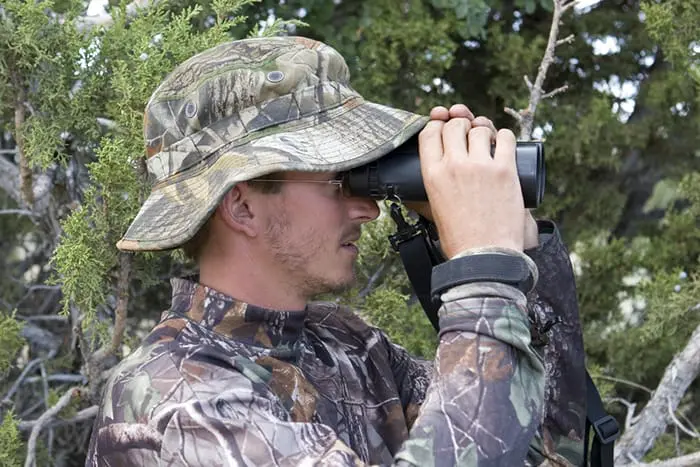
Binoculars Should Make A Huge Difference

Settling for an inexpensive and vaguely functioning optics during your hunting is a miserable way to live your experience in this respect. Always go with a reliable pair of binoculars and spotting scope to better your aim. As prairie dogs are smaller targets, ensure that you check your parallax adjustments especially when you go from close to distant shots. A good range finder is likewise crucial in leveling up your shooting average.

5.) Wear A Hat!

Wear A Hat!

As the sun will most likely be unforgiving on the high plains, it’s a must that you wear something above your head. Also, an application of sunblock wouldn’t hurt! For your upper and lower garments, go for the new, sweat-wicking pants and shirt. Both should make you more comfortable in the long run.

6.) A Quiet Rifle Is A Silent Prairie Killer

A quiet rifle is a silent prairie killer

Most seasoned hunters are suggesting to equip yourself with a suppressed rifle. This kind of gun should benefit you as prairie dogs are hypersensitive to sound. The more noise your gun makes, the more time they may lurk in their holes. Moreover, owning and using a suppressor means that you won’t be needing an ear protection and that itself is a bonus.

Final thoughts

Hunting prairie dogs are just about any other hunting activities. It involves similar firearms and equipment that you may, in fact, also use to some of your other hunting hobbies. With just a little modification on your gear and attitude altogether, your experience should be quick in no time.

The tips that I’ve outlined for you should guide you enough in this specific journey. Meanwhile, feel free to sound in the comment section below if you feel like I’ve missed on something crucial. Until then, happy hunting!

Share it on Pinterest!

Amazing Tips On Prairie Dog Hunting (#5 Should Make Your Head Happy)

Filed Under: Hunting 09:09 by Kevin Steffey

Where To Shoot A Hog? (The Answers Will Make You Amazed!)

Where To Shoot A Hog? (The Answers Will Make You Amazed!)

Whatever weapon you may be choosing when you’re hunting, it’s quite easy to alternate these firearms as their form and build are almost if not technically the same. On the other hand, the same couldn’t be said when it comes to targeting animals in the wild.

Take for example the anatomies of a deer and a hog. These animals differ in a way that you should be aware where to shoot them. For the latter animal however, it’s infamous for being quite tenacious to hunt and for that you must be equipped with the right knowledge as to where to shoot a hog

Related: Where To Shoot A Deer – Top 5 Best Places To Shoot A Deer

This entire article is dedicated to a single purpose — that is to know exactly where you can shoot a hog. These hog-hunting spots should also provide you reasons as to why these locations should give you a vantage point when taking down these wild hogs.

Where To Shoot A Hog? Shooting And The Hog Anatomy

Before we head right into these desired spots, it’s important to note that wild hogs are not deers and that whenever you’d shoot a hog with an aim you’d usually target a dear, chances are you’d end up with a gut shot — ultimately missing your chance on claiming the critter! Anatomically, the heart and lungs of a hog are situated forward and a bit lower than that of a deer. This is critical whenever you’d like to make a distinction between the two.

where to shoot a hog

https://www.americanhunter.org/

#1 The Spinal Cord, Brain Stem, And The Neck Shot

If you’re aiming for an immediate incapacitation or an instantaneous death on your target, aim for the hog’s spinal cord and brain stem. Meanwhile, a neck shot should offer you a larger target area as opposed to aiming for the animal’s brain only. The hog’s spine runs from the base of its skull all the way to its midpoint where its neck right above its shoulders is situated.

I’d highly suggest that you aim right below and to the rear of the ear of the hog. This is known to be a good shot and should bring any hog down that swiftly.

#2 The Front Shoulder, Low-Into-The-Chest Shot

Some hunters would always go for the lung/heart shot. If you’re one of them, target a broadwide shot that aims for the forward section of the front shoulder and low in the chest. If penetrated sufficiently, this should give the hog a double lung and heart shot that is proven to be just fatal.

If you’re shooting from a quarter away, go for the exit in a way that your aim is for a spot that should cause the bullet to go through directly right in between of the front shoulders and in the lower part of the center of the hog’s chest. This strategy is especially notorious as it should give you a clean, lung and heart shot. Meanwhile, aim for the animal’s center of the chest whenever you’re wanting a head-on shot.

Realted: The Definitive Guide On How To Bait Wild Hogs ( #1 Tip Is Important)

#3 The Ear Holes Shot

Most hunters who don’t dilly-dally when it comes to aiming for the sure kill spot go an “ear-holes” shot. Deemed as the easiest target, the hog’s ear holes present a solid target that once you hit it, your target’s neck should break and effect a quick death.

On the other hand, hogs are known to be considerably mobile that moves their heads to varying directions. In this regard, targeting for ear holes can be quite a challenge. To weather this, observe a hog which stops for a long amount of time. When you happen to notice this, go right for the ear holes. And if these holes are just too difficult to target on, settle for the other vital organs that were mentioned above.

You can watch this video clip  to check on how it looks like to shoot a hog via its ear holes.

Some More Winning Tips

where to shoot a hog in the head

  •  If you choose to go for a heart or a lung shot. You have to keep in mind that most smaller caliber weapons have some difficulty in penetrating. This is due as it should go through a combination of bone, muscle mass and scar tissue in the shoulder of larger targets. If this arises, you can always go for a head shot.
  • The other benefit you can get from doing a neck shot is that it won’t be able to destroy the hog’s head. This should allow a taxidermist to repair the damage whenever you decide to have this hog mounted.
  • Ensure that you don’t make a bad shot as this could lead to what we call a “gut shot hog” in which could give you an extended tracking experience. Meanwhile, this type of shot can also go arduously and at times, there will not be much of a blood trail left for you. However, when you’re able to shoot an even “farther back” shot and hit a back leg instead, this can still immobilize the hog and should give you another chance for a follow-up shot.
  • In the event that you come across with a wounded hog, observe utmost precautions as they could be quite dangerous to deal with. In just a matter of second, you could end up being seriously injured or even dead. As such, make sure that you exterminate your target first even before you get near to it.

In this same respect, be very careful when you shoot the offspring of a sow. Any sane mother in this world can charge at you maddeningly if she sees you trying to hurt or toy with her brood.

Final thoughts

Animals have varying anatomies and as a hunter you must be equipped and knowledgeable enough to know these information as this could determine the success of your hunt. The same logic applies to shooting hogs.

As their anatomy differs from deers, it should be your responsibility to know which parts to shoot. Any lack of this information thereof could derail your goal or worse, injure you in the process. Ultimately, arm yourself with the outlined tips above and remember that the most important thing in hog hunting is that you should kill it quickly and be safe!

Filed Under: Hunting 09:11 by Kevin Steffey

How To Use A Climbing Tree Stand – How to Gain a Huge Advantage with a Climbing Tree Stand

How To Use A Climbing Tree Stand – How to Gain a Huge Advantage with a Climbing Tree Stand

Learning how to use a climbing tree stand could gain you a large advantage and improve your hunting results.

Tree stands allow you the opportunity to rise above the forest floor, which gives you a much better field of view.

The portability of a climbing tree stand also provides this exceptional opportunity without the limitations of a stationary stand.

You can follow your prey to an ideal location and then set up your stand rather than having to wait in one place in hopes that the animal will come to you.

There are some challenges associated with this versatile solution and it is a good idea to become acquainted with these before deciding if this is the method you want to try.

It is important to note that hunting in grassland or desert areas will render a tree stand useless because the stand requires a strong, sturdy tree to climb above your hunting area.

Although there is a growing variety of tree stands available today, each of them has three essential components: the foot platform, sitting stand, and safety harness.

How To Use A Climbing Tree Stand – Parts of a Tree Stand

When you examine a climbing stand long enough it will become evident that these are tools that require careful attention when in use.

The Tree

The stand itself uses the physics of leverage in order to work properly. As such, you want to choose a tree that will match the needs of your stand. A short, skinny tree with smooth bark is unlikely to provide adequate support for your needs. What you will look for instead is a living, thick trunked tree that has rough bark. It is also a good idea to choose a tree that has few to no lower limbs that need to be removed as you climb.

Finding just the right tree can often present a sizeable challenge, but for your own safety, it is good to let patience be your guide. It does you no good to grow impatient and make a poor choice for your stand. A potential timesaving step is to scout out an area ahead of time if you know that you will be hunting in that area. Identify several suitable trees and mark them with some sort of removable identification so that you can unmark them after your hunt is complete.

Sitting Platform

This is the upper part of the stand upon which you will sit once you have reached the height suitable to view your hunting ground. Place this upper part around the tree above the foot platform.

Foot Platform

Placethe platform in such a way that it leans against the tree at a downward angle towards the tree. This is because as you go higher in the tree it will get narrower and the foot platform will begin to even out.

Safety Harness

how to build a climbing tree stand

Via: Amazon.com

Make sure you have the safety harness before you begin climbing. Too many people skip the safety harness because they claim it gets in the way or slows them down. This is a very hazardous decision to make and is a highly discouraged practice. Consider the result if you are not secured to the tree by the harness and the platform fails – or you fall asleep – high up in the tree. You have no choice but to fall to the ground if disaster strikes.

Raising the Platform

To raise the platform to the desired height:

  • Put your feet in the straps located on the foot stand and get a good grip on the upper part.
  • With your arms, lift the upper platform a few feet and provide some downward pressure to make sure it engages the tree.
  • Once you are sure that the upper part is secure, lift the lower part with your legs and engage that part against the tree.
  • Repeat the process until you reach the desired tree height.This height should be high enough to provide unrestricted view of your hunting area and is at the proper angle for properly targeting your game. For most situations, it is not necessary to go more than ten to twenty feet, but higher elevations may be necessary. Use your best judgment and let experience be your guide.
  • Secure the safety harness to yourself and to the tree.

With the stand now secure in the tree, the easy part is done. Waiting for the game to appear and in just the right spot for a clean kill is probably the hardest for many hunters. For this reason, many manufacturers of climbing tree stands offer comfortable seat options. It would be wise to consider this as an essential accessory for your stand as personal comfort will allow you to stay aloft far longer.

When you are ready to come back down to earth, hopefully after a successful kill, reverse the process you performed in getting the stand up into the tree.To return to the ground, simply reverse the process.

For a better look at how to use a treestand, check out this video:

Safety First

An important safety item to consider is not carrying a loaded weapon while setting up,or taking down, the tree stand. This may seem obvious to you, but it is not hard to forget some of the simple things in the heat of the moment. The jarring motion involved in setting up a stand can make a loaded weapon dangerous, and should it fall to the ground, you have no control where the weapon is pointed.

The tree stand safety harness explained:

Additional Advantages

Hunting is not the only activity that can benefit from using a climbing tree stand. Bird watchers can experience a completely new level of excitement by getting up to the level where birds live and play. Because they are portable, they can also be very useful while scouting out a new hunting area. Looking at a map or signs on the ground are valuable skills to know, but there is nothing like seeing an area from above ground to determine if a certain spot is truly worth your time and effort.

Once you practice with a climbing tree stand and are comfortable using it, employing it on your next hunt will likely be a rewarding experience. If you have never hunted with this kind of stand, you may wonder how you ever did without it.

​

Filed Under: Hunting 10:12 by Kevin Steffey

  • « Previous Page
  • 1
  • …
  • 16
  • 17
  • 18
  • 19
  • 20
  • …
  • 44
  • Next Page »
  • Best Shooting Rest Reviews For A Perfect Hunting – Best Shooting Rests Reviews
  • Hunting Safety: 5 Best Treestand Safety Harnesses Reviewed
  • How Fast Can A Deer Run – How Hard Would It Be To Catch A Frightened Deer On The Run
  • Rice Bran for Deer- How to Effectively Use Rice Bran to Attract a Deer?
  • The Best Reloading Scale for Consistent Accuracy
  • Which Shotgun Choke Is The Most Open?
  • 17hmr vs 22lr: Which one Should You Use?
  • 5 Top Coyote Hunting Dogs That Are Proven To Be Tremendous Hunters
  • Best Shot Timer: Things to Know About the Top 10 Great Shot Timers
  • Elk Hunting 101: 5 of the Best Elk Hunting Boots

DMCA.com Protection Status

Deerhuntingfield.com is a participant in the Amazon.com Services LLC Associates Program, an affiliate advertising program designed to provide a means for sites to earn advertising fees by advertising and linking to Amazon.com. Additionally, deerhuntingfield.com participates in various other affiliate programs, and we sometimes get a commission through purchases made through our links.