Deer Hunting Field

Hunting Blog

  • Hunting
    • Best Coon Hunting Lights
    • Best Treestand Safety Harness
    • Best Hunting Boots
    • Best Rubber Hunting Boots
    • Best Muck Boots For Hunting
    • Best Treestand Safety Harness
    • Best Hunting Spotlights
    • Best Elk Hunting Boots
  • Archery
    • Best Arrow Rest
    • Best Bow Sights
    • Best Single Pin Bow Sight
  • Gun, Shooting & Accessories
    • Best Bipod for Long Range Shooting
    • Best Scope For Ar 10
    • Best Shooting Rest
    • Best AR 15 Bipod
    • Best AR 15 Slings
    • Best ACOG Clone
    • Best Shot Timers
    • Best Rifle Bipods
    • Best Shooting Tripods
  • Survival
    • Survival Shelter
    • Finding and Purifying Water in the Wilderness
  • About Us

Rabbit Hunting With Beagles: Successful Rabbit Hunting in 5 Steps

Rabbit Hunting With Beagles: Successful Rabbit Hunting in 5 Steps

Hunting rabbit using dogs is one of the oldest traditions humanity has. Some breeds are used more frequently than others, and if you look over the records you’ll find that rabbit hunting with beagles is one of the most time honored traditions within small game hunting. If you’re interested in giving it a shot, then we’ve got a guide for you so that you can maximize your success.

How to Train Your Beagle – Rabbit Hunting With Beagles

Step 1: Picking a Dog

Rabbit Beagle

Training a rabbit dog isn’t the hardest task in the world, but it’ll definitely consume some time and it should be started when the dog is a puppy. Not all dog breeds are suitable for this style of hunting, but there are a few different breeds which are used.

The most notable of these is undoubtedly the beagle. They’re steadfast, loyal, and good looking dogs which have been bred for a long time specifically for this task.

The second most common is the basset hound, which has been used for some time for chasing small game, and we’ll focus on these two breeds as they’re similar in temperament and hunting styles. Some faster dogs are used, but they’ll generally be trained to hunt in a different way.

Beagles are undoubtedly the most common rabbit hunting dogs in the world, and if you’re planning on raising a dog specifically for the sport then few hunters would recommend anything else.

Related:11 Best Duck Hunting Dogs That Will Make You A Professional Hunter

Step 2: Starting to Train Your Dog

Training a dog to hunt rabbits isn’t the most extensive task in the world. This is good, since anyone with even moderate dog handling skills and willing pup will be able to train their dog to aid them in the field fairly easily.

You’ll want to start training your pup at about eight weeks of age, so it’ll usually be fairly soon after you pick up your dog from a reputable breeder.

Start with a rabbit foot from a previous kill or a piece of rabbit hide Tie it off with some rope or paracord and let the pup play with it. Drag it around the yard on the string and encourage them to chase it. When they get good at that, start hiding the foot and letting them track it down themselves.

Make sure to use liberal usage of praise as well as treats when they pull off something exceptional. You’ll want to do this pretty often for about a month before moving on.

Related: Fill Your Bag: How to Find the Best Times to Hunt Rabbit

Step 3: Getting the Dog on a Track

Rabbit Chase

Next you’ll want to take your dog out and get it on a rabbit’s track. It’s important not to just drag the dog out to the hunting grounds and let it loose, otherwise it might fixate on a different animal which is rather counter-productive if you’re training your dog to hunt rabbits after all. Visually identify the animal, approach and wait for it to flee.

Place your dog right on the track, if they’re acquainted with the scent, which they should be since you’ve been letting them play with rabbit parts, they should get excited. It might not happen the first, the second, or even the third time, but sooner or later they’ll go chasing the scent trail and begin barking.

You should be trying to do this daily if at all possible. If they’re still not getting it after a couple of weeks, a live trap containing a rabbit can be opened in front of the dog to try and get them more excited for the chase. It really is best to train them on a track without visual confirmation on the dog’s part if possible however.

Once they’ve gotten that down for a few weeks it’s time to begin the next stage of training. Even if you’re planning on using a pack, at this stage it’s best to train the dog by themselves so they can build their confidence.

FURTHER READING 

➜ What are the Best Rubber Hunting Boots – The Hunter’s Guide

➜ The Best AR15 Slings On The Market

➜ Best AR 15 Bipod Reviews – The Best Bipod for AR15

Step 4: Letting Them Find The Trail

Beagle Hunting A Rabbit In The Snow

Now you should take your dog out on their own, bring them through the brush and let them pick up the scent trail on their own. Sooner or later they’ll get it and you’ll have your dog finding rabbits and chasing them all on their own.

Once they’re confidently chasing prey on their own you can begin to train them with other dogs. Once again this isn’t usually going to happen the first time you take them out, but soon you’ll find them communicating and actively chasing the rabbits as a team.

At this point, their initial training is done and you’ll want to take them out as often as possible before you go on an actual hunt.

Step 5: Hunting With Your Dog

dog Beagle breed standing on the green grass

Hunting rabbits with dogs can be an unusual experience for those who haven’t done it before. For the most part, the rabbit will easily outpace your dogs in a sprint but cottontails and their ilk aren’t generally very intelligent. You’ll listen to the dog or dogs as they chase and try to position yourself().

The rabbit will alternate between a full sprint and just kind of hopping away depending on how far back the dogs are. Listen carefully to the hounds’ noise as they give chase, and make sure you’re in position by the time they loop back.

In most cases the rabbit will circle back to where it was initially and you’ll be able to take the shot. If you’re using a shotgun then a tight choke is preferred and shot timing is everything since you definitely don’t want to injure your hound.

Related: Why do Hunters Pattern their Shotguns? The Final Truth Revisited

When the opportunity is there, take it. If you don’t get the opportunity on the first pass, don’t worry, the beagle-hare circle is likely to continue for another revolution. Just make sure that you’re set up and not spending time chatting with your partner when your opportunity arises.

Remember to reward your dogs, after all they’ve just inducted you into a whole different kind of small game hunting.

Conclusion

Most of the difficulty associated with rabbit hunting with beagles comes from the initial training and then getting used to the sounds and way the rabbit will move ahead of the dogs. It can be an extremely rewarding experience, however, and the baying of your dogs on a crisp morning will soon be music to your ears.

Have any questions or comments? Drop us a line below!

Filed Under: Hunting 22:03 by Kevin Steffey

11 Best Duck Hunting Dogs That Will Make You A Professional Hunter

11 Best Duck Hunting Dogs That Will Make You A Professional Hunter

If you are comfortable with dogs and are an avid hunter, then getting a hunting dog would be the most natural course to take. Hunting dogs or gundogs as they are also known as, add dimension to a hunt, which makes the whole process much more fun.

These dogs are very popularly used in duck hunting, so here are 11 best duck hunting dogs that are widely used by hunters to enhance their hunting experience.

11 Best Duck Hunting Dogs

1. Labrador Retriever

Duck hunting in the autumn on the prairie

Although Labrador retrievers are popular as house pets, they are extremely useful as duck hunting dogs as well. They come under the ‘retriever’ class of dogs which is self-explanatory. They are suitable for duck hunting due to their love for water, and of course, they love to retrieve stuff, with the right kind of training.

Being loyal and obedient helps a great deal, as your Labrador retriever will be at your side wherever you go, and will be responsive to your commands. This trait is especially useful when you are tracking down a duck in undergrowth but do not want to be detected. This breed is so successful in duck hunting that you can even enter your dog into duck hunting competitions.

2. English Cocker Spaniel

English Cocker Spaniel

This breed has some natural hunting instincts. Commonly adopted as house pets due to their loyalty, good temperament, and love for children, English cocker spaniels will always be nosing around, even at home, so they are in their element when taken out on a hunt.

With the right training, these dogs will be perfect for fetching shot birds and will be able to dig them out from the most inaccessible of locations. These animals are extremely sure-footed and can negotiate their way through the most difficult terrain to reach the prey.

3. Beagle

Brittany Springer

The Beagle comes under the ‘hound’ category. They have an exceptionally sharp sense of smell, which makes them useful not only in tracking down game but also drugs and illegal substances, which makes them useful for anti-narcotic squads as sniffer dogs.

Related: Rabbit Hunting With Beagles: Successful Rabbit Hunting in 5 Steps

They are hardy dogs, so you don’t need to be too concerned about health issues which is a major consideration while selecting a particular breed of dog for home or professional/recreational purposes.

Although it is a small breed, a beagle is surprisingly fast and agile, which makes it an excellent choice for duck hunting.

4. Brittany Springer

Brittany Springer

These are commonly considered as ‘upland bird retrievers’ as they perform well out of the water. However, you will see that the Brittany Springer works quite well in the water as well, which makes this breed suitable for duck hunting. As they are from the spaniel class of dogs, they have most of the spaniel traits.

This breed is loyal and obedient, and they are quick learners and eager to please, which makes it a pleasure just training them. They have a good temperament, so will be good company for you on long waiting periods during a hunt. They are good swimmers as well, which is a useful qualification for a dog that is going to assist you in duck hunting.

5. Chesapeake Bay Retriever

Chesapeake Bay Retriever

This particular breed has abundant endurance and brains to match and is an active animal which you can rely on during duck hunting trips. Originally, the Chesapeake Bay retriever was used as a working dog. However, in time, it was realized that this dog made an excellent hunting dog and today it is among the best duck hunting dogs around.

The Chesapeake Bay retriever is a sturdily-built dog with stamina to match its size. With the tireless energy of these dogs, you can plan long, extended duck hunts without the risk of fatigue setting in with your dog. Strong, loyal and dependable are the words that come to mind while describing this dog. They also make good companions, so you will not be alone on your duck hunts.

6. Weimaraner

Italian Spinone

This hunting dog will appeal to you for its sheer patience and impressive retrieving capabilities. The Weimaraner is also fast and are versatile in retrieving different game. This breed has a history of over 1,000 years and sports the nickname of ‘gray ghost’ due to its slightly spooky appearance and silvery coat.

Despite its rather scary appearance, the Weimaraner is a loyal canine that will make a good companion for you. The main USP of this dog is its excellent running capabilities. It is inherently a runner and has been known to outrun judges on horseback during hunt tests. You can use them for some particularly long-range shooting, and they will just love the challenge.

7. Italian Spinone

Italian Spinone

Not a very well-known name in dog breeds, this is a breed of hunting dog that is as reliable as they get. Italian Spinones are distinctive in their structure and easily recognizable. They are a hardy breed and are extremely aligned to humans. These dogs were first bred in Italy and came to the UK in the 1980s, and a few years later they started to appear in the United States. They come under the category of large dogs.

Italian Spinones are excellent all-purpose gun dogs and are known more for stamina than speed, which is a useful trait for duck hunting. They love to swim and retrieve, which is, of course, much required in a duck hunting dog. Once you have trained an Italian Spinone, you have a trusted duck hunting buddy for life!

8. Golden Retriever

Golden Retriever

Here is a real all-rounder breed which is just as good in the house as out on a duck hunt. Golden retrievers are excellent house dogs and are superb with children. But out on a hunt, the dog practically changes its avatar and becomes a ruthless tracker which loves what it does.

Golden retrievers are good at all sorts of retrieving and are equally good in field trials and similar competitions. This breed is built for both stamina and speed, and despite their size, these dogs have surprisingly soft mouths when it comes to retrieving a bird. These dogs also love to swim and are really in their element on a hunt. Golden retrievers are unanimously among the best duck hunting dogs around.

9. German Shorthaired Pointer

Although popularly used for hunting inland game, the German shorthaired pointer makes and excellent duck hunting dog as well. Check out the smooth, efficient retrieving skills of his German shorthaired pointer in this neat video. As you can see, this is a powerful breed, with lots of stamina and a strong swimmer as well which the qualities you look for are in a good duck hunting dog.

There is a downside, however, because due to their thin coats, these dogs have the tendency to get cold after extended exposure to the water, so are not recommended for long duck hunts.

10. Poodle

Poodle

The fact that this breed of dogs is suitable for duck hunting might come as a surprise to many, but they make excellent gundogs and have a talent for water retrieving. Poodles are very smart and are easy to train. They make good companions as well.

Despite being a small breed, the standard poodle is considerably larger and exhibits high energy levels. These dogs are very enthusiastic about retrieving and eager to please which makes a good combination for a good duck hunting dog, contrary to the belief that poodles are only fit for the sitting-room couch, dog shows or a circus.

11. Deutsch Drahthaar

Deutsch Drahthaar

Here is another breed that is not known to many. The Deutsch Drahthaar, often confused with German wirehairs are ideal for duck hunting. These dogs are highly robust and have been described as a breed that “points like an English setter and retrieves like a Labrador.” These dogs are tireless and capable of swimming a mile in freezing water with minimal effort.

The Drahthaar has a thick waterproof coat which gives it an advantage while in the water and makes it possible to swim in freezing water. They are also very loyal and make excellent companions.

Quest for the Best Duck Hunting Dogs

Suitable hunting dogs are something that we all look for if we are into duck hunting using gun dogs. If you look at each of these breeds, you will see that they all vary slightly from one breed to the other. Further, if you start using dogs for duck hunting, you will notice that even within the same breed, there will be a slight variance in the temperament of the dogs from one to another.

We can safely conclude that there are no actual “best duck hunting dogs.” A best duck hunting dog is an ideal scenario, which can only remain hypothetical. It is a standard that you can aim for in an attempt to make a suitable choice for an excellent gundog. This way, you will have some idea of what you are looking for and are likely to end up with a duck hunting dog which will work well for you.

We hope you have found this article informative. Please feel free to send in your comments, feedback, and queries to which we will be glad to respond.

Filed Under: Hunting 23:33 by Kevin Steffey

Prairie Dog Hunting – Amazing Tips On Prairie Dogs Shooting (#5 Should Make Your Head Happy)

Prairie Dog Hunting – Amazing Tips On Prairie Dogs Shooting (#5 Should Make Your Head Happy)

Whether you’re just trying to improve your accuracy that comes along with this polarizing hobby or you’re only joining the bandwagon because there are no available animals to shoot in the wild, prairie dog hunting is just about any hunting today — it has certain parameters for you to follow to become efficient.

These requirements will either spell success or doom on your hunting aspirations. This article should serve as your quick guide to prairie dog hunting with that prowess that you richly deserve.

Related: Where To Shoot A Hog? (The Answers Will Make You Amazed!)

In our discussion, we’ll tackle some of the only tips that you need to make your hunting experience an efficient one. But right before we head into them, let’s briefly cover first what prairie dogs are, their known habitat and the behavior they’ll usually exhibit.

Getting Acquainted

prairie dog hunting tips

Dubbed as “keystone” species, prairie dogs have colonies that develop habitats that benefit roughly 150 other species. They also serve as a food source for other animals which include coyotes, eagles, badgers, and the endangered black-footed ferrets. These dogs are likewise known to allow a greater diversity of plants to endure and thrive.

The population of prairie dogs once accumulated to over a billion — a figure that also catapulted most hunters to term them as varmints. Some of the fraction of the population can be found most in North America alone. Over the years, their numbers have thinned out by over 95 percent. At this point, the numbered prairie dogs are around 10 to 20 million.

The black-tailed type of prairie dogs eat grasses, sedges, forbs or the flowering plants, and the roots and seeds. Meanwhile, prairie dogs are also noted for eating insects.

Prairie Dogs’ Known Behavior

Observed as very social animals, prairie dogs live closely in family groups that are known as “coteries.” These comprise of an adult male, one or more adult females and the young offspring of course. They are mostly grouped together in “wards” (neighborhoods). When wards expand, they’ll make up a colony or town.

Prairie dogs also possess a sophisticated system of communication. It includes a variety of pitched warning barks that mean different types of predators. If you’ve ever wondered how prairie dogs got their moniker, this is because of the earlier settlers who traveled across the plains who happened to think that the warning calls these animals evoked were sounding like dogs which are barking.

Watch this video to see on how prairie dogs behave.

Prairie Dog Hunting – Key Things To Consider When Hunting Prairie Dogs

1. Find The Best Locations To Go Hunting

prairie dog hunting guns

One of the considerations you need to keep in mind when hunting for prairie dogs is location. No matter how expert a hunter you are or how accurate your shooting prowess is, if your area doesn’t produce these animals, all your bets are off.

Related:  The Best Shooting Rest Reviews For A Perfect Hunting – Top Rated Shooting Rest

Inarguably, the best times to hunt prairie dogs are during late spring and early summer. Once this heat hits these critters, they’d prefer to lurk in their holes to protect themselves from the intense heat. Meanwhile, shooting them can still be available throughout the year. And if you’re gunning for more prairie dogs, it’s believed that mid-May is the best time for this hunt. It is when new pups begin to emerge.

On the other hand, the shooting is deemed to be slower in the heat of the day at the end of June to early July. It is also when these dogs are more alert and cunning at the same time.

2.) Choosing The Right Gun

prairie dog hunting guns1

As prairie dogs aren’t stationary targets, your ideal shot on them rests on a limited window of time. As such, the best rifle for this experience is said to be the flat-shooting guns. These guns should work whether you want to target the longer shots or would only go for the closer dogs as flat trajectories implement.

I’d advise that the ideal rig for this shooting is to arm yourself with two rifles along with a rimfire 17 for your close shots. Also, go for an accurate centerfire to accommodate the long-range bragging shots.

Related:  What Is The Main Difference Between Centerfire And Rimfire Ammunition

3.) Your Knowledge On Zero And Ammo

Zero And Ammo

Before heading with your friends to go hunting, ensure that you come with a solid zero. It is always a safe and a smart idea to check that zero once you arrive in your location. Even if you’re already seasoned, some best rifles can still experience a change of zero, especially in extended trips. Remember that it’s difficult to zero a rifle using a dust signature even for the best shooters out there.

Another thing to consider in this section is your ability to shoot in the wind. If you have a limited experience with this, it is best that you equip yourself first with some education. As the wind isn’t quiet on flat plains, you are most likely to shoot in full value winds that go beyond 15 miles per hour. You can better your skill by making use of wind gauges and applying your knowledge of reading mirage.

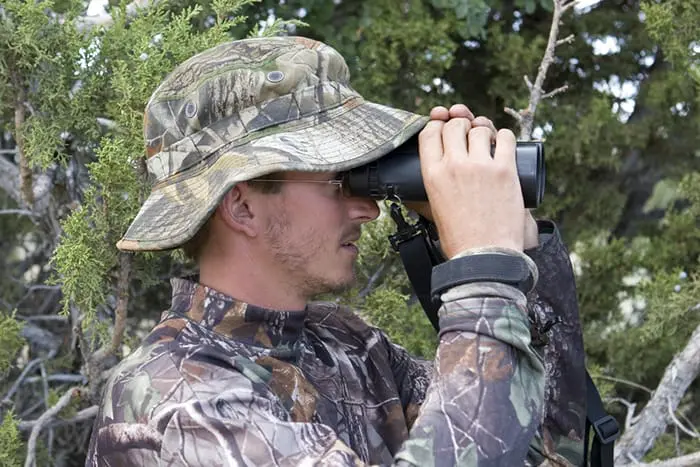
4.) A Great Pair Of Binoculars Should Make A Huge Difference

Binoculars Should Make A Huge Difference

Settling for an inexpensive and vaguely functioning optics during your hunting is a miserable way to live your experience in this respect. Always go with a reliable pair of binoculars and spotting scope to better your aim. As prairie dogs are smaller targets, ensure that you check your parallax adjustments especially when you go from close to distant shots. A good range finder is likewise crucial in leveling up your shooting average.

5.) Wear A Hat!

Wear A Hat!

As the sun will most likely be unforgiving on the high plains, it’s a must that you wear something above your head. Also, an application of sunblock wouldn’t hurt! For your upper and lower garments, go for the new, sweat-wicking pants and shirt. Both should make you more comfortable in the long run.

6.) A Quiet Rifle Is A Silent Prairie Killer

A quiet rifle is a silent prairie killer

Most seasoned hunters are suggesting to equip yourself with a suppressed rifle. This kind of gun should benefit you as prairie dogs are hypersensitive to sound. The more noise your gun makes, the more time they may lurk in their holes. Moreover, owning and using a suppressor means that you won’t be needing an ear protection and that itself is a bonus.

Final thoughts

Hunting prairie dogs are just about any other hunting activities. It involves similar firearms and equipment that you may, in fact, also use to some of your other hunting hobbies. With just a little modification on your gear and attitude altogether, your experience should be quick in no time.

The tips that I’ve outlined for you should guide you enough in this specific journey. Meanwhile, feel free to sound in the comment section below if you feel like I’ve missed on something crucial. Until then, happy hunting!

Share it on Pinterest!

Amazing Tips On Prairie Dog Hunting (#5 Should Make Your Head Happy)

Filed Under: Hunting 09:09 by Kevin Steffey

  • « Previous Page
  • 1
  • …
  • 20
  • 21
  • 22
  • 23
  • 24
  • …
  • 49
  • Next Page »
  • AffioraTool Privacy Policy
  • AffioraTool
  • Best Shooting Rest Reviews For A Perfect Hunting – Best Shooting Rests Reviews
  • Hunting Safety: 5 Best Treestand Safety Harnesses Reviewed
  • How Fast Can A Deer Run – How Hard Would It Be To Catch A Frightened Deer On The Run
  • Rice Bran for Deer- How to Effectively Use Rice Bran to Attract a Deer?
  • The Best Reloading Scale for Consistent Accuracy
  • Which Shotgun Choke Is The Most Open?
  • 17hmr vs 22lr: Which one Should You Use?
  • 5 Top Coyote Hunting Dogs That Are Proven To Be Tremendous Hunters

DMCA.com Protection Status

Deerhuntingfield.com is a participant in the Amazon.com Services LLC Associates Program, an affiliate advertising program designed to provide a means for sites to earn advertising fees by advertising and linking to Amazon.com. Additionally, deerhuntingfield.com participates in various other affiliate programs, and we sometimes get a commission through purchases made through our links.