Deer Hunting Field

Hunting Blog

  • Hunting
    • Best Coon Hunting Lights
    • Best Treestand Safety Harness
    • Best Hunting Boots
    • Best Rubber Hunting Boots
    • Best Muck Boots For Hunting
    • Best Treestand Safety Harness
    • Best Hunting Spotlights
    • Best Elk Hunting Boots
  • Archery
    • Best Arrow Rest
    • Best Bow Sights
    • Best Single Pin Bow Sight
  • Gun, Shooting & Accessories
    • Best Bipod for Long Range Shooting
    • Best Scope For Ar 10
    • Best Shooting Rest
    • Best AR 15 Bipod
    • Best AR 15 Slings
    • Best ACOG Clone
    • Best Shot Timers
    • Best Rifle Bipods
    • Best Shooting Tripods
  • Survival
    • Survival Shelter
    • Finding and Purifying Water in the Wilderness
  • About Us

How Far Can A Bullet Travel? How Far Does A Bullet Travel

How Far Can A Bullet Travel? How Far Does A Bullet Travel

Are you curious how far a bullet can travel? Or maybe you’re interested in finding out the maximum range for your firearm. Either way, you’ve come to the right place. In this post, we’ll take a look at how far bullets can travel and what factors influence their range.

Handguns come in a variety of types. From their sizes, to their capabilities, right down to their functions, your handguns are evidently a decidedly diverse type of weapon. As such, when you go for a handgun, it is a must that you know its specifics to ascertain how they can be used in the future.

Meanwhile, the same logic goes for bullets — they also come in numerous types. From their weight to its type, you can say that they too have specifics. And when you’re particular with these, you can be adept at how they function.

Have you ever wondered how far a bullet can travel? Or what kind of damage it can do to the human body? In this blog post, we will explore the science behind bullets and how they travel. We will also take a look at some real-life examples of people who have been shot. So, if you’re interested in learning more about bullets, keep reading

Related:A Comprehensive Guide on How to Make Exploding Targets

What is a Bullet ?

A bullet, in simple terms, is a projectile that is fired from a gun. It is a small, metal cylinder that is filled with explosives or propellants. When the trigger of the gun is pulled, the bullet is released and it travels down the barrel of the gun. The explosive or propellant inside the bullet then ignites and causes it to travel forward at high speeds.

What is a Bullet travel?

Bullet travel is the distance that a bullet travels from the moment it leaves the barrel of a gun until the moment it hits its target. The speed at which a bullet travels depends on several factors, such as the type of gun that is used, the type of bullet, and the amount of powder or propellant that is used.

Types of Bullets

There are three main types of bullets: lead, jacketed, and hollow-point.

Lead Bullets

Lead bullets are the oldest type of bullet and they are made from pure lead. They are the least expensive type of bullet and they are commonly used in pistols and revolvers. Lead bullets are not as durable as other types of bullets and they can deform or break up when they hit a hard surface.

Jacketed Bullets

Jacketed bullets are made from lead, but they have a thin layer of copper or brass that surrounds them. This layer helps to protect the lead from breaking up when it hits a hard surface. Jacketed bullets are more expensive than lead bullets, but they are more durable and less likely to deform when they hit a target.

Hollow-Point Bullets

Hollow-point bullets are the most expensive type of bullet and they are made from lead. They have a hollowed-out center that causes them to expand when they hit a target. This expansion helps to create a larger wound cavity and increases the chance of causing fatal injuries. Hollow-point bullets are commonly used in rifles and shotguns.

What Factors Influence Bullet Range?

Several factors influence the range of a bullet, including the type of gun that is used, the type of bullet, and the amount of powder or propellant that is used.

Type of Gun

The type of gun that is used affects the range of a bullet. Rifles have longer barrels than pistols, and this allows bullets to travel further before they start to lose speed. In addition, rifles are typically more accurate than pistols, which also increases the range of a bullet.

Type of Bullet

The type of bullet also affects the range of a bullet. Lead bullets are less durable than other types of bullets and they can deform or break up when they hit a hard surface. Jacketed bullets are more durable than lead bullets and they are less likely to deform when they hit a target. Hollow-point bullets are the most expensive type of bullet and they are made from lead. They have a hollowed-out center that causes them to expand when they hit a target. This expansion helps to create a larger wound cavity and increases the chance of causing fatal injuries.

Amount of Powder or Propellant

The amount of powder or propellant that is used also affects the range of a bullet. A higher amount of powder or propellant will produce a bullet that travels at a higher speed and has a longer range. However, a higher amount of powder or propellant can also make a bullet more unstable and more likely to break up when it hits a target.

How Do Bullets Work?

Bullets work by using the force of an explosion or the pressure of a gas to propel them forward at high speeds. The type of gun that is used, the type of bullet, and the amount of powder or propellant that is used all affect the range of a bullet. The size and weight of a bullet also affect the amount of damage it can cause. Hollow-point bullets are the most dangerous type of bullet because they expand when they hit a target, which creates a larger wound cavity and increases the chance of causing fatal injuries.

How bullets are shot: The factors that affect how far a bullet will travel.

There are three main factors that affect how far a bullet will travel: the firearm, the ammunition and the environment.

The Firearm: The type of firearm that is used will have a major impact on how far a bullet can travel. For example, a rifle will typically have a longer range than a handgun.

The Ammunition: The type of ammunition that is used will also have a significant impact on how far a bullet can travel. For example, a standard 9mm round will travel further than a .22 round.

The Environment: The environment in which the shot is fired will also play a role in how far the bullet travels. For example, if the shot is taken outdoors in open terrain, the bullet will travel further than if it is taken indoors in a confined space.

The General Principle That Surrounds The Range Of A Bullet

how far can a bullet travel before it falls

As we obviously tackling physics in this article, let’s not dilly-dally and get right to the bottom of this: the optimal range that is fried out from your chosen rifle or gun varies.

It will depend on the type of your handgun, too. Meanwhile, the bullet that you shoot out of your weapon is slowed down because of the so-called “drag factor” which is defined as the eventual accumulation of the resistance that comes from the air right before the bullet decreases its momentum.

Also, the maximal range of your weapon that may also tell the range of your bullet should depend by the velocity of its muzzle, the “ballistic coefficient, the temperature of the air at the time when it was shot, the amount of gunpowder, the form factor, and the angle when you shot the bullet.

For the curious, you can use this formula to find out your gun’s maximum range:

Muzzle Velocity X Ballistic Coefficient (BC) = Maximum Range

Note:

You can determine the “Ballistic Coefficient” by learning the Form Factor (FF) & Sectional Density. Your Sectional Density can be known by multiplying the Projectile Weight in grams by (1.422)/square of caliber (mm).

On the other hand, it could be quite a challenge to determine the Form Factor of the bullet in the equation without subjecting it in a thorough calculation. However, if you’re able to know which type of bullet is being used, then the form factor can be established through the following information:

Type of Bullet Form Factor
Flat nose lead 0.8
Round Nose Lead 0.9
Round Nose Jacketed 1.0
Semi-Pointed Soft Point 0.9 to 1.1
Pointed Soft Point 1.2 to 1.6
Pointed Full Jacket 1.5 to 1.8
Pointed Full Jacket Boat Tailed 1.9 to 2.0

As soon as you’re able to verify the form factor, your ballistic coefficient is now ready to be calculated. Ultimately, the muzzle velocity of the gun, which is the final step that you need to determine can now be learned. This can be ascertained by simply multiplying it by the (BC).

Watch this video to know how to have a better ballistic coefficient.

FURTHER READING:

➜ The Best AR15 Slings On The Market

➜ What Are The Basic Parts Of Ammunition?

➜ How To Hold A Rifle Steady – The Best Way To Hold A Rifle Steady

The Truth About Maximum Bullet Distances

It is no secret that knowing the maximal distances your bullet can attain is quite complicated. A plethora of factors have to be considered before you can measure the average maximum distances that are taken.

As such, you can just ferret out the maximum distances by means of these theories and computing their averages. Simply put, there is no adequate or sufficient response to our permeating question. It’s just how physics work. But later on, we’ll try to at least get to the numbers.

You really must consider the load you’re using along the rifle too. On top of that, the condition of both should likewise be factored in the equation as that could make these distances vary. When you have a barrel that not that maintained or has never been cleaned for quite some time, chances are the bullets might not travel that far.

Other factors that must be considered are the platform that you’re using, the loads, and the wind, temperature, and humidity. Needless to say, for your bullets to travel considerably far, your platform has to be in pristine condition and that your loads shouldn’t be damaged at all.

Under the assumption that these conditions are met, then we can have an idea on how far can a bullet travel.

how far can a pistol bullet travel

How Far Can A Bullet Travel?

Now that we know the different variables to be considered, we can now proceed in answering our question.

The AR-15 rifle is one of the most popular firearms in America today. It uses a .223 Remington cartridge which has a muzzle velocity of around 3,200 feet per second. With that being said, the maximum range of an AR-15 would be around 1.3 miles or 6,835 yards. However, this is under the condition that there is no wind at all and that the target is completely stationary.

But of course, in reality, these conditions aren’t met which explains why the actual range would be shorter than what was initially computed.

As for handguns, their maximum ranges are considerably shorter. For example, a 9mm handgun has a muzzle velocity of around 1,300 feet per second. With that being said, its maximum range would be around 328 yards or 804 meters.

Now you might be wondering:

“What if I use a magnum cartridge instead of the regular cartridge?”

For magnum cartridges, the ballistic coefficients are typically higher which means that their bullets will travel farther than regular cartridges.

Additionally, the amount of powder used in Magnum cartridges also contributes to this increase in distance. As a result, the maximum range for magnum cartridges are much farther than what was initially computed.

For example, a .44 magnum cartridge has a muzzle velocity of 1,500 feet per second. With that being said, its maximum range would be around 1,100 yards or 3,280 meters.

To put things into perspective, the AR-15 has a maximum range of around 1.3 miles while the .44 magnum has a maximum range of around 3.2 miles. That’s almost a three-fold increase in distance!

In general, the further the distance, the more factors that come into play which makes predicting the trajectory quite difficult. As such, most shooters typically don’t take shots that are beyond 500 yards as the margin for error becomes quite large.

Even though we were able to compute the maximum ranges for both cartridges, it’s important to note that these are under ideal. In reality, there are a lot of factors that can affect the distance that a bullet can travel.

As such, it’s always best to err on the side of caution and not take shots that are too far as you might not be able to hit your target.

The different variables to be considered when trying to determine the maximum range of a bullet are:

– The type of firearm being used

– The type of cartridge being used

– The condition of both the firearm and the cartridge

– The platform being used

– The wind speed and direction

– The temperature

– The humidity

– The elevation

With all of these factors to be considered, it can be quite difficult to determine the maximum range of a bullet. However, under ideal conditions, the AR-15 rifle has a maximum range of around 1.3 miles while the .44 magnum has a maximum range of around 3.2 miles.

It’s important to note that these ranges are under ideal conditions and that in reality, the ranges will be shorter due to the different variables that come into play. As such, it’s always best to err on the side of caution and not take shots that are too far as you might not be able to hit your target.

What can happen when a bullet travels too far.

When a bullet is shot out of a gun, the pressure and force that is exerted on the bullet is tremendous. In fact, it can be more than enough to cause the bullet to disintegrate. This is what’s called as “key holing.”

This happens when the lead core of the bullet separates from the copper jacket and this could lead to dangerous consequences. Not only will it make your bullets ineffective, it might also pierce through unintended targets.

Furthermore, when a bullet pierces through something, it creates a hole. This hole could be larger if the object happens to be softer. And if this hole gets bigger, then there is an increased chance that the air might get inside and affect the trajectory of the bullet. This is commonly called as “wind drift.”

Lastly, a long-distance gunshot can also be dangerous to the shooter. This is because when a gun is fired, it creates recoil. And when this recoil happens over and over again, it could cause the gun to jump out of your hands and potentially harm you.

As you can see, there are a lot of things that need to be taken into account when determining how far a bullet can travel. And while we might not be able to give you an accurate number, we hope that this article has given you a better understanding of how ballistic coefficients work.

The effects of a bullet on its target.

When a bullet is shot out of a gun, it can cause a lot of damage to its target. This is because the bullet is travelling at such a high velocity that it can penetrate through skin, muscle, and bone.

In fact, the FBI uses a measurement called “stopping power” to determine how effective a bullet is when it hits its target. This stopping power is measured by the amount of force that is needed to stop the target from moving.

As you can see, there are a lot of factors that need to be taken into account when determining how far a bullet can travel. And while we might not be able to give you an accurate number, we hope that this article has given you a better understanding of how ballistic coefficients work.

Final Thoughts: How Far Can A Bullet Travel?

Now that we’ve talked about the different variables that come into play, it should be clear by now that there is no definitive answer to this question.

It all depends on the type of firearm, the type of cartridge, the condition of both the firearm and the cartridge, the platform being used, the wind speed and direction, the temperature, the humidity, and the elevation.

With all of these factors to be considered, it can be quite difficult to determine the maximum range of a bullet. However, under ideal conditions, the AR-15 rifle has a maximum range of around 1.3 miles while the .44 magnum has a maximum range of around 3.2 miles. It’s important to note that these ranges are under ideal conditions and that in reality, the ranges will be shorter due to the different variables that come into play.

As such, it’s always best to err on the side of caution and not take shots that are too far as you might not be able to hit your target.

Thank you for reading! We hope that this article has been informative and helpful. If you have any questions or comments about How Far Can A Bullet Travel?, please feel free to leave them down below. And if you’d like to learn more about ballistic coefficients, we suggest checking out our other articles on the subject.

FAQ ‘s

Q: What is the primary use of a ballistic coefficient?

A: The primary use of a ballistic coefficient is to determine how effective a bullet is when it hits its target. This stopping power is measured by the amount of force that is needed to stop the target from moving.

Q: What are the different variables that come into play when determining how far a bullet can travel?

A: There are a lot of factors that need to be taken into account when determining how far a bullet can travel. These include the type of firearm, the type of cartridge, the condition of both the firearm and the cartridge, the platform being used, the wind speed and direction, the temperature,, and elevation.

Q: What is the maximum range of a bullet under ideal conditions?

A: Under ideal conditions, the AR-15 rifle has a maximum range of around 1.3 miles while the .44 magnum has a maximum range of around 3.2 miles. However, it’s important to note that these ranges are under ideal conditions and that in reality, the ranges will be shorter due to the different variables that come into play.

Q: How far can a bullet travel before it falls?

A: It depends on a lot of factors, such as the type of firearm, the type of cartridge, the condition of both the firearm and the cartridge, the platform being used, and so on. As such, it’s not possible to give a definitive answer to this question. Generally speaking, however, under ideal conditions the maximum range of a bullet is around 1.3 miles for an AR-15 rifle and 3.2 miles for a .44 magnum. Keep in mind that these ranges are just estimates and that in reality there can be significant variation based on different factors. So always be careful when taking shots that are too far!

Q: How far can a bullet possibly travel?

Again, this question cannot be answered definitively because there are too many variables involved. However, under ideal conditions the maximum range of a bullet is around 1.3 miles for an AR-15 rifle and 3.2 miles for a .44 magnum. Bear in mind that these ranges are just estimates and that in reality there can be significant variation based on different factors. So always be careful when taking shots that are too far!

Q: Can a bullet travel 5 miles?

A: It’s possible, but highly unlikely. The maximum range of a bullet is around 1.3 miles for an AR-15 rifle and 3.2 miles for a .44 magnum. So while it is possible for a bullet to travel 5 miles, it is very unlikely that it would actually happen.

Q: What are the different variables that come into play when determining how far a bullet can travel?

A: There are a lot of factors that need to be taken into account when determining how far a bullet can travel. These include the type of firearm, the type of cartridge, the condition of both the firearm and the cartridge, the platform being used, wind speed and direction, temperature,, and elevation.

Q: What is the maximum range of a bullet under ideal conditions?

A: Under ideal conditions, the AR-15 rifle has a maximum range of around 1.3 miles while the .44 magnum has a maximum range of around 3.2 miles. However, it’s important to note that these ranges are under ideal conditions and that in reality, the ranges will be shorter due to the different variables that come into play.

Q: What stopping power does a bullet need in order to be effective?

A: The amount of force needed to stop a target from moving is known as the stopping power. It is measured in foot-pounds (ft-lbs) or joules (J). Generally speaking, a bullet needs at least 1,000 ft-lbs of stopping power in order to be effective.

Q: How far can an AK 47 bullet travel?

The maximum range of an AK 47 bullet is around 1.3 miles. However, keep in mind that this is under ideal conditions and that the range will be shorter in reality due to different variables.

Q: How much stopping power does a bullet need to have?

A: A bullet needs at least 1,000 ft-lbs of stopping power to be effective. However, the amount of stopping power needed will depend on the specific situation.

Q: What are the different factors that affect how far a bullet can travel?

A: There are many factors that can affect how far a bullet can travel. These include the type of firearm, the type of cartridge, the condition of both the firearm and the cartridge, the platform being used, wind speed and direction, temperature,, and elevation. All of these factors can have a significant impact on the maximum range of a bullet.

Q: How Far Will a Bullet Travel in Air?

A:In general, the maximum range of a bullet is around 1.3 miles for an AR-15 rifle and 3.2 miles for a .44 magnum. However, there are many factors that can affect this range such as the type of firearm, the type of cartridge, the condition of both the firearm and the cartridge, wind speed and direction, temperature,, and elevation.

Q:How Far Will a Bullet Travel in Water?

A: Bullets will travel much further in water than they will in air. In fact, the maximum range of a bullet can be as much as 10 times greater when it is travelling through water. This is because the resistance of water is much lower than that of air.

Filed Under: Gun, Shooting & Accessories 03:13 by Kevin Steffey

Want To Know How To Clean Deer Antlers? This Guide Gives You The Step-By-Step Instructions!

Want To Know How To Clean Deer Antlers? This Guide Gives You The Step-By-Step Instructions!

Are you a hunter? Do you have a set of deer antlers that you’ve been wanting to clean, but don’t know how? In this blog post, I will show you how to clean deer antlers using just a few simple tools. So, if you’re ready to get started, let’s get started!

Uncleaned and fresh deer antlers usually contain numerous harmful microscopic organisms, like bacteria, which you can’t see with your naked eyes.

If not sterilized, touching and working on this antler can place you at a very high risk, especially if you a hunter who obtained them from your hunting trips, and can infect you with awful sicknesses and diseases.

This is the main reason why you need to know how to clean deer antlers.

Related: When Do Deer Shed Their Antlers? Want to Know When to Hunt For Antlers?

Regardless of whether you have old or fresh deer horns, it’s critical to set aside some reasonable amount of time to clean them. Old antlers are cleaned to keep up an enchanting appearance, while fresh ones must be sterilized to take out harmful microorganisms and germs.

The good news is that cleaning and sterilizing both old and fresh antlers is a simple and clear process that anybody can do and adapt with. Simply follow the step-by-step guides below to have a clean, attractive and disease-free deer antler.

There’s no denying that big bucks with massive racks are a hunter’s dream, but often times the antlers are covered in dried blood, dirt, and other debris. In this blog post we’ll show you how to clean deer antlers quickly and easily so you can enjoy their beauty for years to come. Stay tuned!

What Are Antlers?

Antlers are the horns of male deer and reindeer. The main purpose of antlers is to attract mates and show dominance over other males, but they can also be used for self-defense. Antlers are made of bone and covered in a layer of skin called velvet. As the antlers grow, they are supplied with blood vessels and nerves.

Type of Deer Antlers

There are two types of deer antlers: pedicle and nuptial. Pedicle antlers are attached to the skull at a bony protuberance called a pedicle. Nuptial antlers are not attached to the skull and are shed every year.

Size and Shape of Antlers

The size and shape of antlers vary depending on the species of deer. For example, white-tailed deer have smaller antlers than mule deer. Antlers can be straight or curved, and they may have branching points called tines.

Velvet vs. Hard Antlers

The velvet on antlers is full of blood vessels and is very sensitive. Once the breeding season is over, the blood vessels constrict and the velvet dies. The antlers will then harden and the deer will rub them against trees to get rid of the velvet.

Antlers vs. Horns

Antlers are different from horns. Horns are made of hair and keratin, while antlers are made of bone and covered in velvet. Antlers are also only found on male deer and reindeer, while horns can be found on both males and females.

What is a Clean Deer Antlers ?

A clean deer antler is simply an antler that has been cleaned of all the tissue and blood. This can be done by boiling the antlers in water for several minutes or using a solvent such as bleach. After the antlers are clean, they can be used for a variety of purposes including crafts, decoration, and even jewelry.

Why Clean Deer Antlers?

There are a few reasons why you might want to clean deer antlers.

First, if you plan on using them for crafts or decoration, it’s important to have them free of any tissue or blood.

Second, cleaning the antlers will help preserve them and prevent them from rotting.

Finally, some people believe that cleaning the ant lers can remove any traces of scent, making them less detectable to deer.

Where Do You Get Deer Antlers?

Deer antlers can be found on the ground near deer habitats, or they can be purchased from hunting and sporting goods stores. It is important to only collect antlers that have been shed by the deer, as taking antlers from live deer can damage the animal’s horns.When you’re done with your deer hunting trip, take a few minutes to clean up the area by picking up all the trash you see. This will help keep the environment clean and make it safer for other animals. It’s also a good idea to clean your deer hunting equipment so that you’re ready to go again next time.

Guidelines for Cleaning Deer Antlers

The motivation behind cleaning fresh antlers is to eliminate debris, dirt, hair, blood and any other disturbing particles or substance remaining on them.

Let’s be honest, nobody wants to work with a deer antlers that still have hair or substance on it.

This is the reason why it’s vital and essential to appropriately clean them in advance.

The cleaning process only requires 20-30 minutes of your time.

Cleaning Deer Antlers

Things Required For Cleaning

  • An antler shed
  • A soft scrubby sponge, a Toothbrush and a bristle brush used for heavier bath cleaning
  • 1/4 C. baking soda, blended with enough water until it becomes a paste
  • Elbow grease
  • 1 C. warm water blended with 1 C. hydrogen peroxide
  • 12-gage wire for designing and hanging
  • Old towel
  • Wire cutters or strong sharp scissors

How To Clean Deer Antlers- Steps to Follow

Step 1: Separating From The Skull Cap

The first step is that you must physically take out the antlers from the boney rectangular zone called the skull cap.

This process requires a little amount of elbow grease for the separation because deer antlers actually grows out from the skull cap,

Related:How To Bleach A Deer Skull-No Waste: 5 Simple Steps to a Beautiful Skull Trophy

To begin the separation, get a hacksaw and immovably saw each antler at the ground level where it joins with the cap.

Due to their irregular shape, you may need to protect the antlers to keep the saw cutting edge from moving around amid this process.

Keep sawing through the ground level of the antlers until they become isolated from the skull cap.

deer skull

Step 2: Scrubbing

After you’ve isolated them from the skull cap, you’ll need a wire brush to clean them down to eliminate any outstanding organic matter on them. This process is called Scabbing.

This process requires a basic grill cleaning model and not making use of just any fancy brush.

You can get a wire grill brushes accessible at most home improvement stores. Give careful attention to the zone around the ground level of the antler, as this is the place where the hair and tissue will be hiding.

Give it a thorough scrub and it will fall off without much exertion.

clean antler

Step 3: Boiling Water

The third step is to clean fresh antlers includes by boiling them in water. Few people may feel somehow towards this step but it’s important to eliminate any microbes present in them.

Fill a large cooking pot with water and add a couple dashes of salt. The cooking pot should be large enough to the extent that all the antler will be submerged in the water without any exposure. Put the pot on either a fire pit or stove and sit tight for the water to bubble and boil. I suggest doing this step outside over a fire pit, as it might generate an irritating smell that will linger on for quite some time. Let be honest, you won’t want to stink up your house for attempting to clean a few antlers.

Step 4: Finishing Up

Leave the antler a chance to boil for around 25-30 minutes. Sometimes, you will need to adjust them so that every inch can be submerged in the boiling water.

This process may not be an easy one especially if you have to deal with large antlers. I will recommend using a kitchen utensil to hold them down. Air-dry them outside after the antlers must have boiled effectively.

Antlers are typically delicate and sponge-like instantly after they are boiled and will return to their solidified state subsequent to drying.

Avoid abandoning them in the sun for longer than a day, as the sun can cause a bleaching effect on the regular antler’s color.

Cleaning Old Antlers and Antler Furniture

Old antlers also require cleaning often and often. In case you have antlers items or furniture, for example, centerpieces, lamps or chandeliers, they need to be cleaned and sanitized to prevent dirt and dust from accumulating over time.

This is a much simpler and easier procedure than cleaning fresh antlers, as there’s no organic matter to eliminate.

With only a wet fabric or towel and a drop of soap, you can effectively clean most antlers. Take the towel and swipe it under warm water with the soap added.

Then, wring it out. Make sure not to make use of a totally soaked towel, as an excessive amount of water will cause more damage. Take the damp towel and wipe them down in any direction you want.

In case you still have some on the antlers, just scrub it with more force and exertion. Although, few people make use of bleach to clean their antlers, but I’ve discovered that this shortcut method can stripe the antler’s original color, thereby making them look dull and unattractive. When you are done, clean the antler again with a neat towel to reduce the dampness.

How to Prepare Deer Antlers for Mounting

If you plan on mounting your deer antlers, there are a few things you need to do before you start. First, remove as much of the tissue and blood as possible. You can do this by boiling the antlers in water for several minutes or using a solvent such as bleach. Once they are clean, allow them to dry completely. Then, use a saw to cut off the ends of the antlers and file down any sharp edges. Finally, mount the antlers using a strong adhesive.

How to Clean Deer Antlers for Decoration

If you want to clean deer antlers for decoration, there are two methods you can use: boiling or bleaching.

To boil the deer antlers, place them in a pot of water and bring to a boil. Boil for 5-10 minutes, then remove from the heat and allow to cool. Once they are cool, use a brush to clean off any remaining tissue or blood.

To bleach the deer antlers, place them in a container and cover with bleach. Let them soak for several hours, then rinse with water and allow to dry completely.

Preserving Shed Antlers

If you find a shed antler, you may want to preserve it. The best way to do this is by soaking the antler in a solution of one part bleach to ten parts water. Let it soak for 24 hours, then remove and allow to dry completely. You can also spray the antler with a clear coat of paint or sealer to help protect it from the elements.

What Are Antlers Used For?

Antlers are used for several purposes, including:

Mounting the Antlers for Display

If you want to mount the deer antlers for display, there are a few things you need to do first. First, remove as much of the tissue and blood as possible. You can do this by boiling the antlers in water for several minutes or using a solvent such as bleach. Once they are clean, allow them to dry completely. Then, use a saw to cut off the ends of the antlers and file down any sharp edges. Finally, mount the antlers using a strong adhesive.

Attracting mates 

One of the most popular uses for deer antlers is to attract mates. Male deer use their antlers to display their strength and virility, and females are often drawn to these qualities. If you want to attract a mate, consider displaying your antlers in a place where they are sure to be seen.

Using Deer Antlers for Crafts

If you want to use deer antlers for crafts, there are a few things you need to know. First, remove as much of the tissue and blood as possible. You can do this by boiling the antlers in water for several minutes or using a solvent such as bleach. Once they are clean, allow them to dry completely. Then, use a saw to cut off the ends of the antlers and file down any sharp edges. Finally, sand the antlers to create a smooth surface.

Making Deer Antler Jewelry

Deer antler jewelry is made by drilling holes into the antlers and threading them with wire or cord. First, remove as much of the tissue and blood as possible. You can do this by boiling the antlers in water for several minutes or using a solvent such as bleach. Once they are clean, allow them to dry completely. Then, use a drill to make holes in the antlers. Finally, thread with wire or cord and tie off the ends.

Building shelters  or fences

Deer antlers can also be used to build shelters or fences. If you have a deer problem in your yard, consider using shed antlers to keep them away. The antlers are sharp and pointy, so they are perfect for this purpose. Simply arrange the antlers in a way that will deter the deer from coming into your yard.

Making Deer Antler Knives

Deer antler knives are made by carving the antlers into shape. First, remove as much of the tissue and blood as possible. You can do this by boiling the antlers in water for several minutes or using a solvent such as bleach. Once they are clean, allow them to dry completely. Then, use a saw to carve the antlers into the desired shape. Finally, sand the knife to create a smooth surface.

Protecting territory   

Deer antlers can also be used to protect territory. If you want to keep deer from entering a certain area, consider using shed antlers to deter them. The sharp points and edges of the antlers will make it difficult for the deer to enter the area.

Gathering food 

Deer antler is a source of calcium and other minerals, which makes it a perfect food for deer. If you want to attract deer to your yard, consider placing some shed antlers in the area. The deer will eat the antlers and stay in your yard for a while.

FAQ

How do I clean deer antlers for decoration?

There are two methods you can use: boiling or bleaching. To boil the deer antlers, place them in a pot of water and bring to a boil. Boil for 5-10 minutes, then remove from the heat and allow to cool. Once they are cool, use a brush to clean off any remaining tissue or blood. To bleach the deer antlers, place them in a container and cover with bleach. Let them soak for several hours, then rinse with water and allow to dry completely.

Can I preserve shed antlers?

Yes, you can preserver shed antlers by soaking them in a solution of one part bleach to ten parts water . Let them soak for 24 hours, then remove and allow to dry completely. You can also spray the antler with a clear coat of paint or sealer to help protect it from the elements.

How to clean deer antlers with borax?

There is no scientific evidence to support this claim, but it is something to consider if you are hunting with hounds.

How to clean deer antlers without boiling ?

To clean deer antlers without boiling, you can use a solvent such as bleach. Place the antlers in a container and cover with bleach. Let them soak for several hours, then rinse with water and allow to dry completely. You can also spray the antler with a clear coat of paint or sealer to help protect it from the elements.

How do I remove deer scent from antlers?

There is no scientific evidence to support this claim, but it is something to consider if you are hunting with hounds.

Can I eat deer antlers?

There is no evidence that deer antlers are unsafe to eat, but there is also no evidence that they are nutritious. They are not typically considered a food item.

How do you whiten deer antlers?

To whiten deer antlers, you can either boil them in water or bleach them. To boil the deer antlers, place them in a pot of water and bring to a boil. Boil for 5-10 minutes, then remove from the heat and allow to cool. Once they are cool, use a brush to clean off any remaining tissue or blood. To bleach the deer antlers, place them in a container and cover with bleach. Let them soak for several hours, then rinse with water and allow to dry completely. You can also spray the antler with a clear coat of paint or sealer to help protect it from the elements.

What is the best way to clean deer antlers?

The best way to clean deer antlers is to remove as much of the tissue and blood as possible. You can do this by boiling the antlers in water for several minutes or using a solvent such as bleach. Once they are clean, allow them to dry completely. Then, use a saw to cut off the ends of the antlers and file down any sharp edges. Finally, sand the antlers to create a smooth surface.

Can you soak antlers?

Yes, you can preserver shed antlers by soaking them in a solution of one part bleach to ten parts water . Let them soak for 24 hours, then remove and allow to dry completely. You can also spray the antler with a clear coat of paint or sealer to help protect it from the elements.

Conclusion

If you found out that your antler is still in velvet, you should try boiling them in water mixed with soap. A while later, eliminate any outstanding strands of velvet.

Most antlers discovered to be in velvet will seem permeable and in this manner, stand a high chance of accumulating dirt more easily.

Once more, you can make use of beeswax waterproofing to seal the pores and secure the antlers

One of the awesome ways for hunters to celebrate their trophy buck Is by mounting deer antlers.

As the antlers are being hanged on the wall so that everyone can see and admire, they tend to accumulate lots of dust and debris Also, excessive exposure to sunlight can cause fading making the deer antlers look old and shabby.

Luckily, with only some antlers paint and some household items, you can effectively clean deer antlers and prevent the future fading occurrence. We do love to know your experience about cleaning a deer antler. You can leave us a comment below

Filed Under: Deer Hunting 00:11 by Kevin Steffey

The Search for the Best ACOG Clone – A Good Acog Clone in The World

The Search for the Best ACOG Clone – A Good Acog Clone in The World

Looking for the best ACOG clone? Look no further! We’ve got just what you’re looking for. Our top-of-the-line ACOG clones are sure to satisfy your needs. Plus, our prices are unbeatable! Shop now and see for yourself! You won’t be disappointed.The advanced combat optical gunsight, or ACOG, is valued by soldiers the world over. It’s a rugged, tough, small design that makes it perfect for combat at a wide variety of ranges.There are a range of clones on the market, and their quality ranges from absolute trash to close to the nigh-legendary sight by soldiers the world over.Are you in the market for a new ACOG clone? If so, you’ve come to the right place. In this blog post, we’ll be taking a look at some of the best ACOG clones on the market today. We’ll be comparing features, prices, and more, to help you make the best decision for your needs. So whether you’re looking for a high-end replica or a budget-friendly option, we’ve got you covered. So let’s get started!

Best ACOG Clones Comparison

Product Name Price Score
Bushnell AR Optics 1x MP Illuminated Red/Green T-Dot Reticle Riflescope, $$$$ 95/100 View Product
TACSKSPORT Acog Style Rifle Scope 1×32 Green Dot Optic Sights $ 85/100 View Product
WP Hunt Acog 4×32 Red Fiber Scope Dual Illuminated Dot .223 Ballistic Reticle Rifle Scope $$$ 90/100 View Product
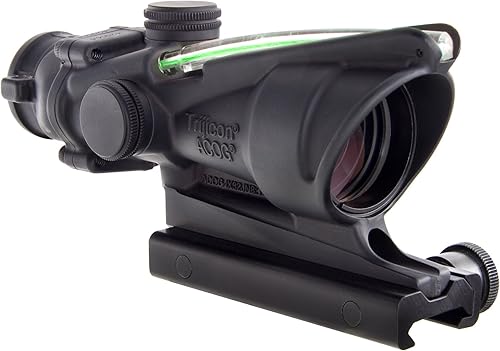
Trijicon TA31F 4×32 ACOG with Dual Illuminated Chevron .223 Ballistic Reticle and TA51 Flattop Mount $$$$$ 95/100 View Product

Ade Advanced Optics 4×32 Fixed Power Green/blue/red Illuminated Reticle Compact Rifle Scope

$$ 83/100 View Product

The Unique Abilities of the Best ACOG Clone

For a clone to be a properly functioning replica of an ACOG (ACOG replica) and not just a stylized, fixed magnification scope it needs a couple of essential qualities to remain intact. An ACOG is designed to be used with the Bindon aiming concept.

➜ Related: Make Your Hunting Trip An Amazing One With The Best Red Dot Magnifier

This unique aiming concept means that you’ll be keeping both eyes open. Target acquisition is then performed with the full range of view and the dominant eye is switched to in order to use the magnification before firing. While they were originally designed for combat arms such as the M16A4 and the M4 carbine, some civilian models have been made which can be mounted on pretty much any rifle with a picatinny rail.

A true ACOG will generally have illuminated sights so that they can be used in bright daylight as well as during nighttime operations and dusk and dawn engagements. They’re also well known for being extremely durable and nearly shock-proof.

The true Trijicon ACOG has acquired an almost legendary reputation, with the US Marine Corps having actually bought enough of them to outfit every single one of their rifles and carbines with them.

While not exactly a hunting sight, they’ve seen quite a bit of popularity in recent years with the rise of the AR-15 model as a popular sporting and self-defense rifles.

They’re definitely worth consideration for those purposes, and also make a good sight for predator hunting which can occur at unpredictable ranges and might require the ability to acquire a target rapidly and fire before it’s out of range.

➜ Related: The Best AR 15 Slings On The Market

Picking the Good ACOG Clones

Due to the popularity of the design and the expensive nature of the Trijicon ACOG there’s been an increase in the amount of clones on the market. While none of them can touch the quality of the original, most of them are available for only a fraction of the price.

Keep in mind the following when you’re looking to purchase a clone and you’ll be on the right track.

Magnification

These sights work with a fixed magnification. The ones issued to the military are 4x with a 32mm objective lens. This is ideal for medium range engagements and many models of the ACOG either incorporate a ghost ring sight or allow for the iron sights on the weapon to still be used with iron sights for engagements under fifty yards.

Most of the clones will follow this pattern, but if you’re planning on using it closer or farther then you’ll probably want to make sure that the magnification of your new clone fits your needs.

Variable power clones do exist, but this kind of defeats the purpose as the idea of the ACOG is to provide a sight which can be used at long range without you needing to fiddle with it.

Sights

Almost all clones will have some variant of a crosshair. Only the highest quality of them will also include a red dot sight. The crosshair itself isn’t as important as the optical qualities of them.

A true ACOG has tritium sights, which keep it illuminated at night as well as fiber optic wiring which will funnel in natural sunlight when the glow in the dark properties of the tritium won’t be apparent. This is part of what makes them so effective for rapidly finding and firing upon a target.

This will be the deal breaker for many people with the cheaper variants, without the illumination you’re just working with a standard, stylized scope. Many ACOG clones will use batteries and LEDs instead, and these can work fine but you’ll need to replace them on occasion.

Battery life and brightness

How long does the battery last on your ACOG clone? And how bright does the sight need to be in order to be effective? These are important questions to ask before making a purchase.

Not all clones have the same battery life or brightness settings. It’s important to know what you’re getting before spending your money.

Durability

A true ACOG is virtually indestructible. They’re tough, made to withstand extreme conditions, and nitrogen purged in order to ensure no fogging occurs within the scope. They’re waterproof down to 11 meters as well.

You’re most likely going to have to compromise here if you’re purchasing a clone. Since you’re unlikely to be in prolonged combat experiences while state side, this is the safest place to make the compromise while allowing you to still get the experience you need.

Quality

When it comes to optical sights, quality is important. After all, you’re going to be using this sight in combat, so you’ll need to be able to rely on it. That being said, there are a lot of different clones on the market, and their quality can vary quite a bit.

Some are close to the real thing, while others are complete garbage. It’s important to do your research and read reviews before making a purchase. That way, you can be sure you’re getting a high-quality product that will serve you well in combat.

Features

Not all ACOG clones are created equal. Some have more features than others. What kind of features are you looking for in an ACOG clone?Do you want one with a red dot sight? Night vision? A range finder? There are a lot of different features available on different ACOG clones, so it’s important to know what you’re looking for before making a purchase.

Cost

We’re going to be frank here: a basic Trijicon ACOG will run you over a thousand dollars. The more advanced models will cost even more. You simply aren’t able to replicate this advanced sight at an extremely low price point except in looks.

The more expensive the sight is, in this case, the better it’s going to be. Decide on your budget now, and stick to it, but remember you can get quality optics that aren’t quite as combat ready for a fraction of the price of an ACOG or high-quality clone.

Of course, if you’re just going for the styling then some of the cheaper clones make acceptable optics systems for your AR rifle.

Suitability for your needs

Not all ACOG clones are created equal. Some are better suited for certain applications than others.

For example, if you’re using a rifle for close-quarters combat, you’ll need a sight with a smaller magnification. If you’re using a rifle for long-range shooting, you’ll need a sight with a larger magnification.

It’s important to choose the right replica for your specific needs. Don’t just buy the first clone you see. Take the time to figure out what you need and find the perfect one for you.

Reticle

The reticle is an important part of the ACOG sight. It’s what you use to aim your rifle. Not all replicas have the same reticle, so it’s important to choose one that’s right for you.

Some replicas have a simple crosshair, while others have more complicated reticles with multiple dots and lines. It’s important to choose one that will be easy for you to use when you’re in combat.

12.Windage & Elevation Adjustments

The ACOG sight has windage and elevation adjustments to help you zero in on your target. Not all replicas have these adjustments, so it’s important to check before you make your purchase.

If you’re going to be using your replica for long-range shooting, it’s especially important to choose one with windage and elevation adjustments.

61NZdtbr6HL. AC SL500

The 5 Best ACOG Clones Reviews On The Market

We’ve gone through the trouble of digging up some of the best, readily available ACOG clones on the market. Let’s take a look at them now and see which of them suits your needs the most readily.

Best Acog Clone Review: Bushnell AR Optics 1x MP Illuminated Red/Green T-Dot Reticle Riflescope

This Bushnell ACOG clone is actually a pretty impressive piece of work as far as tactical scopes go. This clone offers a red or green dot sight which lights up, allowing for quick target acquisition and it is nitrogen filled which makes it pretty much immune to fogging up and other issues which can plague some of the cheaper clones.

best acog clone

This AR optic is configured in a 1x32mm configuration, which makes it great for combat or close range predator hunting. It also has a back-up iron sight mounted on top to allow for quick firing at extremely close ranges. It does lack any sort of magnification, however, but if the dot is configured properly it’s surprisingly accurate.

The main issue that people seem to have with this particular scope is the size of the dot. While it’s fine for anything up to 50 yards many consider it simply too large for long distance shooting. Combined with the 1x magnification, it’s not really a true combat ready scope although it would be perfectly serviceable in close quarters.

It’s obviously not as durable as a Trijicon ACOG, but it’ll hold up well enough for most uses.

Fortunately, the price is fairly low and it’s still a Bushnell. While it may not live up to the true standards expected of an ACOG most people will find it to be a perfectly suitable tactical sight for self-defense and short range shooting.

Pros

  • Adjustable, illuminated dot
  • Back-up iron sights
  • Clear optics
  • Fog and water proof

Cons

  • Dot is too large for long distance shooting
  • Only 1x magnification

Best Budget Acog Scope: TACSKSPORT Acog Style Rifle Scope 1×32 Green Dot Optic

This BD tactical ACOG styled scope has a green dot optic and comes in a 1x32mm configuration. The green dot is nice, and the styling is similar to an ACOG but it’s not so much a clone as a highly stylized optic.

71tC1RhJn0S. AC SL500

That’s not to say it’s a bad set of optics, but you’re not going to be using it with both eyes open and it’s not really a tactical scope. As an optic for an AR-styled .22LR used for small game hunting it’d be quite formidable and it can be dialed in to about 100 yards with a reasonable amount of accuracy.

This means that for the money it’s quite a deal, but it’s no substitute for an actual tactical scope. It holds its zero very well with small caliber rifles, and it looks cool but beyond that it’s not really exceptional.

If you’re just into the styling, however, it’s a good bargain and for the cost it’d be hard to find a better dot sight for a small caliber rifle.

Pros

  • Fiber optics on sight
  • Illuminated sight
  • ACOG styling
  • Holds zero extremely well
  • Amazing value for the price

Cons

  • Not a true tactical scope
  • Low build-quality

Best acog clone 4×32: WP Hunt Acog 4×32 Reticle Red Fiber Scope Dual Illuminated Dot .223 Ballistic Reticle Rifle Scope

This ACOG clone comes in a 4x32mm configuration, making the sight quite similar to those used by US armed forces. Unfortunately, it does suffer from some issues.

61tX80C7FOL. AC SL500

The light on the reticule has no on/off switch, instead it has a light sensor which is supposed to turn the sight on when the light level gets low enough. It looks similar enough to an ACOG and feels quite durable but at the end of the day you simply won’t be able to match a real one with this particular 4×32 ACOG clone.

It’s really not ideal for a “real steel” rifle. Although it’s marketed as being configured for a .223 rifle it doesn’t seem to be able to hold zero. Some people have actually remarked that it’s broken internally after a few shots.

It is quite good for air rifles or similar low recoil weapons like a .22LR rifle if you have the mount for it however. In these cases you’ll still be able to get a good sight picture and won’t have to worry about the recoil damaging it or taking it off zero.

For the cost it makes a decent optic for a low caliber hunting rifle, but it’s not much of a tactical sight when it comes to rifles chambered in anything much bigger than .22LR.

Pros

  • Cheap
  • Illuminated dot with light sensor
  • Fixed 4x magnification
  • Adjustable windage and elevation
  • Fiber optic reticule for shooting during daylight

Cons

  • Not suitable for .223
  • Low build-quality

Best Trijicon Acog Clone: Trijicon TA31F 4×32 ACOG with Dual Illuminated Chevron .223 Ballistic Reticle

Now we’re talking. This is a true Trijicon ACOG clone. Battery-less, nearly indestructible, and nearly indestructible. This is the low end of the line, and it will blow pretty much any clone out of the water.

71nmoVhFsKL. AC SL500

Of course, it also comes at a high cost, but if you’re looking for a tactical sight that you can rely on there really is no substitute for this one. This is the real deal, and despite the high cost you simply won’t be able to find a more reliable scope for combat on the market.

ACOGs are actually restricted for export outside of the United States due to their effectiveness. This should give you some idea of the level of quality you can expect when you order one of these. All of the above advantages apply to this optic.

You can receive your reticule in one of three different colors, depending on your tastes as well. It’s the little things that count, and this is the real deal.

There is, however, one issue with ordering. Until a recent crackdown some unscrupulous individuals had been ordering these, then replacing them with look-alikes and returning them which has left some individuals paying the full price for knock offs.

Take a close look when you receive yours to make sure it has the distinguishing features of a true Trijicon. These are a warning that it contains tritium on the left side of the scope, raised lettering on the right hand side declaring the brand, and a serial number in two places.

While this can be an issue, make sure you report it to Amazon if it happens and return it immediately if it’s a clone.

Pros

  • The real deal
  • No batteries required
  • 4x32mm configuration
  • 3 colors available
  • Highest quality combat optic on the market

Cons

  • Amazon has had some issues with counterfeits
  • Very expensive

Ade Advanced Optics 4×32 Fixed Power Green/blue/red Illuminated Reticle Compact Rifle Scope

This tactical scope from Ade Advanced Optics is quite the bargain for the price. It’s not quite what most people are going to be looking for when it comes to an actual ACOG, but as a fixed magnification scope there’s no real issues with it.

71sa9IS5sNL. AC SL500

It comes with color selection between red, blue, and green in order to suit your tastes and the illumination is quite sufficient for most people. The eye relief on the scope tends to be a little bit close for most people, but it’s not so close you’re at risk of a black eye unless you really limp wrist the rifle.

While it is ACOG styled, it’s not a true tactical scope. That is, you won’t be able to use it with both eyes open. For the cost, however, it’s still a bargain and the little bit of ACOG styling certainly doesn’t hurt.

It does its job as an optic quite well, but it simply isn’t much more than a regular ACOG clone without any special features.

Pros

  • 4x32mm magnification
  • Multi-colored illuminated sights
  • Very reasonably priced• Holds zero well with .223
  • Quite accurate to about 400 yards

Cons

  • Windage and elevation are “backwards” from most scopes
  • Not a true tactical scope

Trijicon Acog’S Best Features

If you’re looking for an ACOG clone, then chances are you’re familiar with the Trijicon Acog. The Trijicon Acog is one of the most popular and well-respected ACOG clones on the market, and it has a lot of great features that make it stand out from the competition.

Here are some of the best features of the Trijicon Acog:

1. Rugged Construction

The Trijicon Acog is built to last. It’s made from tough and durable materials that can withstand even the harshest conditions. It’s perfect for use in combat or other high-stress situations.

2. Dual Illumination

The Trijicon Acog features dual illumination, which allows you to use it in both day and night conditions. It has a red dot sight that allows you to see your target in low-light conditions, and it also has a tritium phosphor lamp that provides illumination in total darkness.

3. 4x Magnification

The Trijicon Acog has a 4x magnification, which is perfect for close-quarters battle. It allows you to see your target clearly and accurately at a distance of up to 400 yards.

4. Wide Field of View

The Trijicon Acog has a wide field of view, which allows you to see more of your target area. This is especially useful in combat situations when you need to be aware of your surroundings.

5. Easy to Use

The Trijicon Acog is easy to use, even for novice shooters. It has intuitive controls and a simple design that makes it easy to operate in any situation.

If you’re looking for an ACOG clone, then the Trijicon Acog is a great option. It has a lot of great features that make it stand out from the competition, and it’s built to last under even the harshest conditions. So, if you’re looking for a quality sight that you can rely on in combat, then the Trijicon Acog is the perfect choice.

ACOG vs. ACOG Clone

When it comes to ACOG clones, there are a lot of different options available on the market. So, which one should you choose?

Here’s a comparison of the Trijicon Acog and some of its most popular clones:

1. Price

The Trijicon Acog is a more expensive sight than most of its clones. It typically costs around $800-$900, while most of its clones cost around $300-$400.

2. Quality

The quality of the Trijicon Acog is much better than that of its clones. The materials used in its construction are tougher and more durable, and it has dual illumination that allows you to use it in both day and night conditions. Its clones, on the other hand, are often made from cheaper materials and don’t have dual illumination.

3. Size

The Trijicon Acog is a bit larger than its clones. It’s about 4 inches long and 2 inches wide, while most of its clones are about 3 inches long and 1.5 inches wide.

4. Weight

The Trijicon Acog is slightly heavier than its clones. It weighs about 12 ounces, while most of its clones weigh about 10 ounces.

5. Magnification

The Trijicon Acog has 4x magnification, while most of its clones have 3x or 6x magnification.

6. Field of View

The Trijicon Acog has a wider field of view than its clones. It has a field of view of about 30 degrees, while most of its clones have a field of view of about 20 degrees.

7. Battery Life

The Trijicon Acog has a longer battery life than its clones. It can be used for up to 8 years without changing the battery, while most of its clones can only be used for up to 5 years before they need to be changed.

When it comes down to it, the Trijicon Acog is a better quality sight than most of its clones. It’s made from tougher and more durable materials, it has dual illumination, and it has a wide field of view. So, if you’re looking for a quality ACOG clone, then the Trijicon Acog is a good option.

How to use an ACOG Clone?

If you’re new to using an ACOG clone, then here’s a quick guide on how to do it:

1. Choose the right model

There are a lot of different ACOG clones on the market, so it’s important to choose the right one for your needs. Consider factors like price, quality, magnification, and field of view when making your decision.

2. Mount the sight

Most ACOG clones come with a mounting kit that includes everything you need to attach it to your rifle. Follow the instructions that come with your particular model to properly mount the sight.

3. zero the sight

Before you can use your ACOG clone, you’ll need to zero it. This means adjusting the windage and elevation so that the point of impact is aligned with the point of aim. Consult your rifle’s owner’s manual for instructions on how to zero the sight.

4. Use the sight

Once the sight is zeroed, you can use it to shoot targets at various distances. To do this, adjust the magnification according to the distance of your target and adjust the windage and elevation until the crosshairs are aligned with your target.

What Is An Acog?

The advanced combat optical gunsight, or ACOG, is a rugged and tough small optic design that is perfect for combat at a wide variety of ranges. It features a 4x magnification and is designed specifically for close-quarters battle.

There are a range of clones on the market, and their quality ranges from absolute trash to close to the nigh-legendary sight by soldiers the world over.

If you’re in the market for a new ACOG clone, then you’ve come to the right place. In this blog post, we’ll be taking a look at some of the best ACOG clones on the market today. We’ll be comparing features, prices, and more, to help you make the best decision for your needs.

Why Buy An Acog Clone?

There are a number of reasons why you might want to buy an ACOG clone. Here are just a few:

1. You need a new optic for your rifle and you’re looking for something that offers the features and quality of an ACOG sight.

2. You’re on a tight budget and you need an affordable option that still offers great features and quality.

3. You want a backup sight in case your primary optic fails or is damaged in combat.

4. You’re looking for an optic to use in close-quarters battle and you need something that will provide the 4x magnification of an ACOG sight.

No matter what your reasons are, we’re here to help you find the best ACOG clone for your needs. So let’s get started!

How does an ACOG Clone work?

An ACOG clone is a replica of the advanced combat optical gunsight. It is designed to provide the same level of performance and durability as the original, at a fraction of the cost. There are a number of different manufacturers that produce ACOG clones, and they vary in terms of quality and price.

When shopping for an ACOG clone, it’s important to consider your needs and budget. If you’re looking for a high-end replica, then you’ll be willing to pay more for it. However, if you’re on a budget, there are still some great options available.

In terms of features, most ACOG clones will offer 4x magnification and a close-quarters battle reticle. Some clones may also offer additional features, such as a red dot sight or night vision compatibility.

When it comes to price, ACOG clones can range from around $100 to $500. The exact price will depend on the manufacturer and the features offered.

Overall, an ACOG clone is a great option if you’re looking for a high-quality replica at a fraction of the cost. Just be sure to consider your needs and budget when making your decision.

Our Recommendation

You can’t go wrong with the Trijicon TA31F 4×32 ACOG. The real deal is always going to outperform any clone on the market. This is actually one of the lower end ACOGs which the company offers, but it’s more than sufficient for anyone looking for a scope suitable for combat.

We also recognize that not everyone can afford such a high priced item, in which case the Bushnell AR Optics 1x MP is the clear winner of the clones we’ve dug up. It’s a respectable tactical scope and its performance will outstrip most of the competition quite easily.

Conclusion

We hope that we’ve helped you find exactly what you’re looking for when it comes to the best ACOG clones on the market. There’s a lot of them on the market that aren’t worth the plastic they’re stamped out of, but each of the above has some advantages regardless of whether or not they’re truly worthy of the ACOG stamp.

Any more questions? Recommendations? Let us know below.

FAQ

What’s better than an ACOG?

An ACOG is a 50mm diameter magnifying optic designed to be mounted on rifles for shooting at higher distances.The Nex Sight is an optical aiming system that operates independently of the rifle weapon’s optics, allowing shots to be taken without being aimed via traditional means. It enables quicker target acquisition, better peripheral vision and an uninterrupted cheek weld position.

Unlike most other systems, you needn’t “zero” or adjust your sights before acquiring a target because the bullet trajectory changes minimally each time you fire it.

What replaced the ACOG?

The ACOG replaced the old NICE guidelines in 2007.The American College of Obstetricians and Gynecologists announced its decision to replace the old National Institute for Clinical Excellence (NICE) guidelines with their own in 2007. These new documents are titled “Committee Opinion”, or CO, instead of UK NICE’s “Guideline.” The major difference between the two is that ACOG’s opinion weighs up science-based evidence much more heavily than NICE due to fears that UK standards might be misleading in making decisions about medical practice.

Is ACOG magnified?

ACOG is a composite material that has a magnification of 2.5x and a focal length of 16mm.ACOG is an abbreviation for Air Combat Optical Gunsight, which was introduced by the military in 1979 as a telescopic sight for fighter planes. The actual optics originally used were from the Model A scope series but improvements have been made over time to make it better suited to ground work as well as aerial applications. In 1985, this scope was offered commercially and it’s been popular ever since with both law enforcement personnel and civilian shooters seeking accuracy at long ranges.

What is an ACOG clone?

An ACOG clone is a copy of the Trijicon ACOG sight. There are many different clones on the market, and they vary in terms of price, quality, and features.

How much does an ACOG clone cost?

ACOG clones typically cost between $300-$400. The Trijicon Acog, which is considered to be one of the best clones on the market, typically costs around $400.

What is better than ACOG?

There is no definitive answer to this question as it depends on your specific needs. However, some people may prefer red dot sights or holographic sights over ACOGs.

What is similar to an ACOG scope?

There are many different types of scopes on the market, but some that are similar to the ACOG scope include variable power scopes and scout scopes.

Who makes a good ACOG?

There are many different companies that make ACOG clones, but some of the more popular ones include Bushnell, Vortex, and UTG.

Is the Trijicon ACOG worth it?

The Trijicon ACOG is a high-quality sight that offers many features that are not found on most of its clones. So, if you’re looking for the best possible ACOG clone, then the Trijicon ACOG is a good option. However, it is also the most expensive option, and some people may find it to be overpriced.

[tcb-script type=”application/ld+json”]{ “@context”: “https://schema.org”, “@type”: “FAQPage”, “mainEntity”: [{ “@type”: “Question”, “name”: “What’s better than an ACOG?”, “acceptedAnswer”: { “@type”: “Answer”, “text”: “An ACOG is a 50mm diameter magnifying optic designed to be mounted on rifles for shooting at higher distances.The Nex Sight is an optical aiming system that operates independently of the rifle weapon’s optics, allowing shots to be taken without being aimed via traditional means. It enables quicker target acquisition, better peripheral vision and an uninterrupted cheek weld position.Unlike most other systems, you needn’t “zero” or adjust your sights before acquiring a target because the bullet trajectory changes minimally each time you fire it.” } },{ “@type”: “Question”, “name”: “What replaced the ACOG?”, “acceptedAnswer”: { “@type”: “Answer”, “text”: “The ACOG replaced the old NICE guidelines in 2007.The American College of Obstetricians and Gynecologists announced its decision to replace the old National Institute for Clinical Excellence (NICE) guidelines with their own in 2007. These new documents are titled “Committee Opinion”, or CO, instead of UK NICE’s “Guideline.” The major difference between the two is that ACOG’s opinion weighs up science-based evidence much more heavily than NICE due to fears that UK standards might be misleading in making decisions about medical practice.” } },{ “@type”: “Question”, “name”: “Is ACOG magnified?”, “acceptedAnswer”: { “@type”: “Answer”, “text”: “ACOG is a composite material that has a magnification of 2.5x and a focal length of 16mm.ACOG is an abbreviation for Air Combat Optical Gunsight, which was introduced by the military in 1979 as a telescopic sight for fighter planes. The actual optics originally used were from the Model A scope series but improvements have been made over time to make it better suited to ground work as well as aerial applications. In 1985, this scope was offered commercially and it’s been popular ever since with both law enforcement personnel and civilian shooters seeking accuracy at long ranges.” } }]}[/tcb-script]

Filed Under: Sights & Optics Tagged With: Hunting Optics & Scopes 23:19 by Kevin Steffey

  • « Previous Page
  • 1
  • …
  • 10
  • 11
  • 12
  • 13
  • 14
  • …
  • 49
  • Next Page »
  • AffioraTool Privacy Policy
  • AffioraTool
  • Best Shooting Rest Reviews For A Perfect Hunting – Best Shooting Rests Reviews
  • Hunting Safety: 5 Best Treestand Safety Harnesses Reviewed
  • How Fast Can A Deer Run – How Hard Would It Be To Catch A Frightened Deer On The Run
  • Rice Bran for Deer- How to Effectively Use Rice Bran to Attract a Deer?
  • The Best Reloading Scale for Consistent Accuracy
  • Which Shotgun Choke Is The Most Open?
  • 17hmr vs 22lr: Which one Should You Use?
  • 5 Top Coyote Hunting Dogs That Are Proven To Be Tremendous Hunters

DMCA.com Protection Status

Deerhuntingfield.com is a participant in the Amazon.com Services LLC Associates Program, an affiliate advertising program designed to provide a means for sites to earn advertising fees by advertising and linking to Amazon.com. Additionally, deerhuntingfield.com participates in various other affiliate programs, and we sometimes get a commission through purchases made through our links.