Deer Hunting Field

Hunting Blog

  • Hunting
    • Best Coon Hunting Lights
    • Best Treestand Safety Harness
    • Best Hunting Boots
    • Best Rubber Hunting Boots
    • Best Muck Boots For Hunting
    • Best Treestand Safety Harness
    • Best Hunting Spotlights
    • Best Elk Hunting Boots
  • Archery
    • Best Arrow Rest
    • Best Bow Sights
    • Best Single Pin Bow Sight
  • Gun, Shooting & Accessories
    • Best Bipod for Long Range Shooting
    • Best Scope For Ar 10
    • Best Shooting Rest
    • Best AR 15 Bipod
    • Best AR 15 Slings
    • Best ACOG Clone
    • Best Shot Timers
    • Best Rifle Bipods
    • Best Shooting Tripods
  • Survival
    • Survival Shelter
    • Finding and Purifying Water in the Wilderness
  • About Us

The Search for the Best ACOG Clone – A Good Acog Clone in The World

The Search for the Best ACOG Clone – A Good Acog Clone in The World

Looking for the best ACOG clone? Look no further! We’ve got just what you’re looking for. Our top-of-the-line ACOG clones are sure to satisfy your needs. Plus, our prices are unbeatable! Shop now and see for yourself! You won’t be disappointed.The advanced combat optical gunsight, or ACOG, is valued by soldiers the world over. It’s a rugged, tough, small design that makes it perfect for combat at a wide variety of ranges.There are a range of clones on the market, and their quality ranges from absolute trash to close to the nigh-legendary sight by soldiers the world over.Are you in the market for a new ACOG clone? If so, you’ve come to the right place. In this blog post, we’ll be taking a look at some of the best ACOG clones on the market today. We’ll be comparing features, prices, and more, to help you make the best decision for your needs. So whether you’re looking for a high-end replica or a budget-friendly option, we’ve got you covered. So let’s get started!

Best ACOG Clones Comparison

Product Name Price Score
Bushnell AR Optics 1x MP Illuminated Red/Green T-Dot Reticle Riflescope, $$$$ 95/100 View Product
TACSKSPORT Acog Style Rifle Scope 1×32 Green Dot Optic Sights $ 85/100 View Product
WP Hunt Acog 4×32 Red Fiber Scope Dual Illuminated Dot .223 Ballistic Reticle Rifle Scope $$$ 90/100 View Product
Trijicon TA31F 4×32 ACOG with Dual Illuminated Chevron .223 Ballistic Reticle and TA51 Flattop Mount $$$$$ 95/100 View Product

Ade Advanced Optics 4×32 Fixed Power Green/blue/red Illuminated Reticle Compact Rifle Scope

$$ 83/100 View Product

The Unique Abilities of the Best ACOG Clone

For a clone to be a properly functioning replica of an ACOG (ACOG replica) and not just a stylized, fixed magnification scope it needs a couple of essential qualities to remain intact. An ACOG is designed to be used with the Bindon aiming concept.

➜ Related: Make Your Hunting Trip An Amazing One With The Best Red Dot Magnifier

This unique aiming concept means that you’ll be keeping both eyes open. Target acquisition is then performed with the full range of view and the dominant eye is switched to in order to use the magnification before firing. While they were originally designed for combat arms such as the M16A4 and the M4 carbine, some civilian models have been made which can be mounted on pretty much any rifle with a picatinny rail.

A true ACOG will generally have illuminated sights so that they can be used in bright daylight as well as during nighttime operations and dusk and dawn engagements. They’re also well known for being extremely durable and nearly shock-proof.

The true Trijicon ACOG has acquired an almost legendary reputation, with the US Marine Corps having actually bought enough of them to outfit every single one of their rifles and carbines with them.

While not exactly a hunting sight, they’ve seen quite a bit of popularity in recent years with the rise of the AR-15 model as a popular sporting and self-defense rifles.

They’re definitely worth consideration for those purposes, and also make a good sight for predator hunting which can occur at unpredictable ranges and might require the ability to acquire a target rapidly and fire before it’s out of range.

➜ Related: The Best AR 15 Slings On The Market

Picking the Good ACOG Clones

Due to the popularity of the design and the expensive nature of the Trijicon ACOG there’s been an increase in the amount of clones on the market. While none of them can touch the quality of the original, most of them are available for only a fraction of the price.

Keep in mind the following when you’re looking to purchase a clone and you’ll be on the right track.

Magnification

These sights work with a fixed magnification. The ones issued to the military are 4x with a 32mm objective lens. This is ideal for medium range engagements and many models of the ACOG either incorporate a ghost ring sight or allow for the iron sights on the weapon to still be used with iron sights for engagements under fifty yards.

Most of the clones will follow this pattern, but if you’re planning on using it closer or farther then you’ll probably want to make sure that the magnification of your new clone fits your needs.

Variable power clones do exist, but this kind of defeats the purpose as the idea of the ACOG is to provide a sight which can be used at long range without you needing to fiddle with it.

Sights

Almost all clones will have some variant of a crosshair. Only the highest quality of them will also include a red dot sight. The crosshair itself isn’t as important as the optical qualities of them.

A true ACOG has tritium sights, which keep it illuminated at night as well as fiber optic wiring which will funnel in natural sunlight when the glow in the dark properties of the tritium won’t be apparent. This is part of what makes them so effective for rapidly finding and firing upon a target.

This will be the deal breaker for many people with the cheaper variants, without the illumination you’re just working with a standard, stylized scope. Many ACOG clones will use batteries and LEDs instead, and these can work fine but you’ll need to replace them on occasion.

Battery life and brightness

How long does the battery last on your ACOG clone? And how bright does the sight need to be in order to be effective? These are important questions to ask before making a purchase.

Not all clones have the same battery life or brightness settings. It’s important to know what you’re getting before spending your money.

Durability

A true ACOG is virtually indestructible. They’re tough, made to withstand extreme conditions, and nitrogen purged in order to ensure no fogging occurs within the scope. They’re waterproof down to 11 meters as well.

You’re most likely going to have to compromise here if you’re purchasing a clone. Since you’re unlikely to be in prolonged combat experiences while state side, this is the safest place to make the compromise while allowing you to still get the experience you need.

Quality

When it comes to optical sights, quality is important. After all, you’re going to be using this sight in combat, so you’ll need to be able to rely on it. That being said, there are a lot of different clones on the market, and their quality can vary quite a bit.

Some are close to the real thing, while others are complete garbage. It’s important to do your research and read reviews before making a purchase. That way, you can be sure you’re getting a high-quality product that will serve you well in combat.

Features

Not all ACOG clones are created equal. Some have more features than others. What kind of features are you looking for in an ACOG clone?Do you want one with a red dot sight? Night vision? A range finder? There are a lot of different features available on different ACOG clones, so it’s important to know what you’re looking for before making a purchase.

Cost

We’re going to be frank here: a basic Trijicon ACOG will run you over a thousand dollars. The more advanced models will cost even more. You simply aren’t able to replicate this advanced sight at an extremely low price point except in looks.

The more expensive the sight is, in this case, the better it’s going to be. Decide on your budget now, and stick to it, but remember you can get quality optics that aren’t quite as combat ready for a fraction of the price of an ACOG or high-quality clone.

Of course, if you’re just going for the styling then some of the cheaper clones make acceptable optics systems for your AR rifle.

Suitability for your needs

Not all ACOG clones are created equal. Some are better suited for certain applications than others.

For example, if you’re using a rifle for close-quarters combat, you’ll need a sight with a smaller magnification. If you’re using a rifle for long-range shooting, you’ll need a sight with a larger magnification.

It’s important to choose the right replica for your specific needs. Don’t just buy the first clone you see. Take the time to figure out what you need and find the perfect one for you.

Reticle

The reticle is an important part of the ACOG sight. It’s what you use to aim your rifle. Not all replicas have the same reticle, so it’s important to choose one that’s right for you.

Some replicas have a simple crosshair, while others have more complicated reticles with multiple dots and lines. It’s important to choose one that will be easy for you to use when you’re in combat.

12.Windage & Elevation Adjustments

The ACOG sight has windage and elevation adjustments to help you zero in on your target. Not all replicas have these adjustments, so it’s important to check before you make your purchase.

If you’re going to be using your replica for long-range shooting, it’s especially important to choose one with windage and elevation adjustments.

61NZdtbr6HL. AC SL500

The 5 Best ACOG Clones Reviews On The Market

We’ve gone through the trouble of digging up some of the best, readily available ACOG clones on the market. Let’s take a look at them now and see which of them suits your needs the most readily.

Best Acog Clone Review: Bushnell AR Optics 1x MP Illuminated Red/Green T-Dot Reticle Riflescope

This Bushnell ACOG clone is actually a pretty impressive piece of work as far as tactical scopes go. This clone offers a red or green dot sight which lights up, allowing for quick target acquisition and it is nitrogen filled which makes it pretty much immune to fogging up and other issues which can plague some of the cheaper clones.

best acog clone

This AR optic is configured in a 1x32mm configuration, which makes it great for combat or close range predator hunting. It also has a back-up iron sight mounted on top to allow for quick firing at extremely close ranges. It does lack any sort of magnification, however, but if the dot is configured properly it’s surprisingly accurate.

The main issue that people seem to have with this particular scope is the size of the dot. While it’s fine for anything up to 50 yards many consider it simply too large for long distance shooting. Combined with the 1x magnification, it’s not really a true combat ready scope although it would be perfectly serviceable in close quarters.

It’s obviously not as durable as a Trijicon ACOG, but it’ll hold up well enough for most uses.

Fortunately, the price is fairly low and it’s still a Bushnell. While it may not live up to the true standards expected of an ACOG most people will find it to be a perfectly suitable tactical sight for self-defense and short range shooting.

Pros

  • Adjustable, illuminated dot
  • Back-up iron sights
  • Clear optics
  • Fog and water proof

Cons

  • Dot is too large for long distance shooting
  • Only 1x magnification

Best Budget Acog Scope: TACSKSPORT Acog Style Rifle Scope 1×32 Green Dot Optic

This BD tactical ACOG styled scope has a green dot optic and comes in a 1x32mm configuration. The green dot is nice, and the styling is similar to an ACOG but it’s not so much a clone as a highly stylized optic.

71tC1RhJn0S. AC SL500

That’s not to say it’s a bad set of optics, but you’re not going to be using it with both eyes open and it’s not really a tactical scope. As an optic for an AR-styled .22LR used for small game hunting it’d be quite formidable and it can be dialed in to about 100 yards with a reasonable amount of accuracy.

This means that for the money it’s quite a deal, but it’s no substitute for an actual tactical scope. It holds its zero very well with small caliber rifles, and it looks cool but beyond that it’s not really exceptional.

If you’re just into the styling, however, it’s a good bargain and for the cost it’d be hard to find a better dot sight for a small caliber rifle.

Pros

  • Fiber optics on sight
  • Illuminated sight
  • ACOG styling
  • Holds zero extremely well
  • Amazing value for the price

Cons

  • Not a true tactical scope
  • Low build-quality

Best acog clone 4×32: WP Hunt Acog 4×32 Reticle Red Fiber Scope Dual Illuminated Dot .223 Ballistic Reticle Rifle Scope

This ACOG clone comes in a 4x32mm configuration, making the sight quite similar to those used by US armed forces. Unfortunately, it does suffer from some issues.

61tX80C7FOL. AC SL500

The light on the reticule has no on/off switch, instead it has a light sensor which is supposed to turn the sight on when the light level gets low enough. It looks similar enough to an ACOG and feels quite durable but at the end of the day you simply won’t be able to match a real one with this particular 4×32 ACOG clone.

It’s really not ideal for a “real steel” rifle. Although it’s marketed as being configured for a .223 rifle it doesn’t seem to be able to hold zero. Some people have actually remarked that it’s broken internally after a few shots.

It is quite good for air rifles or similar low recoil weapons like a .22LR rifle if you have the mount for it however. In these cases you’ll still be able to get a good sight picture and won’t have to worry about the recoil damaging it or taking it off zero.

For the cost it makes a decent optic for a low caliber hunting rifle, but it’s not much of a tactical sight when it comes to rifles chambered in anything much bigger than .22LR.

Pros

  • Cheap
  • Illuminated dot with light sensor
  • Fixed 4x magnification
  • Adjustable windage and elevation
  • Fiber optic reticule for shooting during daylight

Cons

  • Not suitable for .223
  • Low build-quality

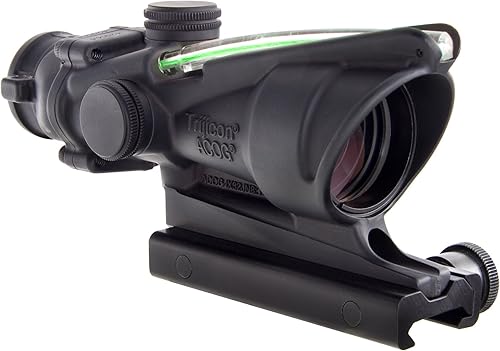
Best Trijicon Acog Clone: Trijicon TA31F 4×32 ACOG with Dual Illuminated Chevron .223 Ballistic Reticle

Now we’re talking. This is a true Trijicon ACOG clone. Battery-less, nearly indestructible, and nearly indestructible. This is the low end of the line, and it will blow pretty much any clone out of the water.
71nmoVhFsKL. AC SL500

Of course, it also comes at a high cost, but if you’re looking for a tactical sight that you can rely on there really is no substitute for this one. This is the real deal, and despite the high cost you simply won’t be able to find a more reliable scope for combat on the market.

ACOGs are actually restricted for export outside of the United States due to their effectiveness. This should give you some idea of the level of quality you can expect when you order one of these. All of the above advantages apply to this optic.

You can receive your reticule in one of three different colors, depending on your tastes as well. It’s the little things that count, and this is the real deal.

There is, however, one issue with ordering. Until a recent crackdown some unscrupulous individuals had been ordering these, then replacing them with look-alikes and returning them which has left some individuals paying the full price for knock offs.

Take a close look when you receive yours to make sure it has the distinguishing features of a true Trijicon. These are a warning that it contains tritium on the left side of the scope, raised lettering on the right hand side declaring the brand, and a serial number in two places.

While this can be an issue, make sure you report it to Amazon if it happens and return it immediately if it’s a clone.

Pros

  • The real deal
  • No batteries required
  • 4x32mm configuration
  • 3 colors available
  • Highest quality combat optic on the market

Cons

  • Amazon has had some issues with counterfeits
  • Very expensive

Ade Advanced Optics 4×32 Fixed Power Green/blue/red Illuminated Reticle Compact Rifle Scope

This tactical scope from Ade Advanced Optics is quite the bargain for the price. It’s not quite what most people are going to be looking for when it comes to an actual ACOG, but as a fixed magnification scope there’s no real issues with it.

71sa9IS5sNL. AC SL500

It comes with color selection between red, blue, and green in order to suit your tastes and the illumination is quite sufficient for most people. The eye relief on the scope tends to be a little bit close for most people, but it’s not so close you’re at risk of a black eye unless you really limp wrist the rifle.

While it is ACOG styled, it’s not a true tactical scope. That is, you won’t be able to use it with both eyes open. For the cost, however, it’s still a bargain and the little bit of ACOG styling certainly doesn’t hurt.

It does its job as an optic quite well, but it simply isn’t much more than a regular ACOG clone without any special features.

Pros

  • 4x32mm magnification
  • Multi-colored illuminated sights
  • Very reasonably priced• Holds zero well with .223
  • Quite accurate to about 400 yards

Cons

  • Windage and elevation are “backwards” from most scopes
  • Not a true tactical scope

Trijicon Acog’S Best Features

If you’re looking for an ACOG clone, then chances are you’re familiar with the Trijicon Acog. The Trijicon Acog is one of the most popular and well-respected ACOG clones on the market, and it has a lot of great features that make it stand out from the competition.

Here are some of the best features of the Trijicon Acog:

1. Rugged Construction

The Trijicon Acog is built to last. It’s made from tough and durable materials that can withstand even the harshest conditions. It’s perfect for use in combat or other high-stress situations.

2. Dual Illumination

The Trijicon Acog features dual illumination, which allows you to use it in both day and night conditions. It has a red dot sight that allows you to see your target in low-light conditions, and it also has a tritium phosphor lamp that provides illumination in total darkness.

3. 4x Magnification

The Trijicon Acog has a 4x magnification, which is perfect for close-quarters battle. It allows you to see your target clearly and accurately at a distance of up to 400 yards.

4. Wide Field of View

The Trijicon Acog has a wide field of view, which allows you to see more of your target area. This is especially useful in combat situations when you need to be aware of your surroundings.

5. Easy to Use

The Trijicon Acog is easy to use, even for novice shooters. It has intuitive controls and a simple design that makes it easy to operate in any situation.

If you’re looking for an ACOG clone, then the Trijicon Acog is a great option. It has a lot of great features that make it stand out from the competition, and it’s built to last under even the harshest conditions. So, if you’re looking for a quality sight that you can rely on in combat, then the Trijicon Acog is the perfect choice.

ACOG vs. ACOG Clone

When it comes to ACOG clones, there are a lot of different options available on the market. So, which one should you choose?

Here’s a comparison of the Trijicon Acog and some of its most popular clones:

1. Price

The Trijicon Acog is a more expensive sight than most of its clones. It typically costs around $800-$900, while most of its clones cost around $300-$400.

2. Quality

The quality of the Trijicon Acog is much better than that of its clones. The materials used in its construction are tougher and more durable, and it has dual illumination that allows you to use it in both day and night conditions. Its clones, on the other hand, are often made from cheaper materials and don’t have dual illumination.

3. Size

The Trijicon Acog is a bit larger than its clones. It’s about 4 inches long and 2 inches wide, while most of its clones are about 3 inches long and 1.5 inches wide.

4. Weight

The Trijicon Acog is slightly heavier than its clones. It weighs about 12 ounces, while most of its clones weigh about 10 ounces.

5. Magnification

The Trijicon Acog has 4x magnification, while most of its clones have 3x or 6x magnification.

6. Field of View

The Trijicon Acog has a wider field of view than its clones. It has a field of view of about 30 degrees, while most of its clones have a field of view of about 20 degrees.

7. Battery Life

The Trijicon Acog has a longer battery life than its clones. It can be used for up to 8 years without changing the battery, while most of its clones can only be used for up to 5 years before they need to be changed.

When it comes down to it, the Trijicon Acog is a better quality sight than most of its clones. It’s made from tougher and more durable materials, it has dual illumination, and it has a wide field of view. So, if you’re looking for a quality ACOG clone, then the Trijicon Acog is a good option.

How to use an ACOG Clone?

If you’re new to using an ACOG clone, then here’s a quick guide on how to do it:

1. Choose the right model

There are a lot of different ACOG clones on the market, so it’s important to choose the right one for your needs. Consider factors like price, quality, magnification, and field of view when making your decision.

2. Mount the sight

Most ACOG clones come with a mounting kit that includes everything you need to attach it to your rifle. Follow the instructions that come with your particular model to properly mount the sight.

3. zero the sight

Before you can use your ACOG clone, you’ll need to zero it. This means adjusting the windage and elevation so that the point of impact is aligned with the point of aim. Consult your rifle’s owner’s manual for instructions on how to zero the sight.

4. Use the sight

Once the sight is zeroed, you can use it to shoot targets at various distances. To do this, adjust the magnification according to the distance of your target and adjust the windage and elevation until the crosshairs are aligned with your target.

What Is An Acog?

The advanced combat optical gunsight, or ACOG, is a rugged and tough small optic design that is perfect for combat at a wide variety of ranges. It features a 4x magnification and is designed specifically for close-quarters battle.

There are a range of clones on the market, and their quality ranges from absolute trash to close to the nigh-legendary sight by soldiers the world over.

If you’re in the market for a new ACOG clone, then you’ve come to the right place. In this blog post, we’ll be taking a look at some of the best ACOG clones on the market today. We’ll be comparing features, prices, and more, to help you make the best decision for your needs.

Why Buy An Acog Clone?

There are a number of reasons why you might want to buy an ACOG clone. Here are just a few:

1. You need a new optic for your rifle and you’re looking for something that offers the features and quality of an ACOG sight.

2. You’re on a tight budget and you need an affordable option that still offers great features and quality.

3. You want a backup sight in case your primary optic fails or is damaged in combat.

4. You’re looking for an optic to use in close-quarters battle and you need something that will provide the 4x magnification of an ACOG sight.

No matter what your reasons are, we’re here to help you find the best ACOG clone for your needs. So let’s get started!

How does an ACOG Clone work?

An ACOG clone is a replica of the advanced combat optical gunsight. It is designed to provide the same level of performance and durability as the original, at a fraction of the cost. There are a number of different manufacturers that produce ACOG clones, and they vary in terms of quality and price.

When shopping for an ACOG clone, it’s important to consider your needs and budget. If you’re looking for a high-end replica, then you’ll be willing to pay more for it. However, if you’re on a budget, there are still some great options available.

In terms of features, most ACOG clones will offer 4x magnification and a close-quarters battle reticle. Some clones may also offer additional features, such as a red dot sight or night vision compatibility.

When it comes to price, ACOG clones can range from around $100 to $500. The exact price will depend on the manufacturer and the features offered.

Overall, an ACOG clone is a great option if you’re looking for a high-quality replica at a fraction of the cost. Just be sure to consider your needs and budget when making your decision.

Our Recommendation

You can’t go wrong with the Trijicon TA31F 4×32 ACOG. The real deal is always going to outperform any clone on the market. This is actually one of the lower end ACOGs which the company offers, but it’s more than sufficient for anyone looking for a scope suitable for combat.

We also recognize that not everyone can afford such a high priced item, in which case the Bushnell AR Optics 1x MP is the clear winner of the clones we’ve dug up. It’s a respectable tactical scope and its performance will outstrip most of the competition quite easily.

Conclusion

We hope that we’ve helped you find exactly what you’re looking for when it comes to the best ACOG clones on the market. There’s a lot of them on the market that aren’t worth the plastic they’re stamped out of, but each of the above has some advantages regardless of whether or not they’re truly worthy of the ACOG stamp.

Any more questions? Recommendations? Let us know below.

FAQ

What’s better than an ACOG?

An ACOG is a 50mm diameter magnifying optic designed to be mounted on rifles for shooting at higher distances.The Nex Sight is an optical aiming system that operates independently of the rifle weapon’s optics, allowing shots to be taken without being aimed via traditional means. It enables quicker target acquisition, better peripheral vision and an uninterrupted cheek weld position.

Unlike most other systems, you needn’t “zero” or adjust your sights before acquiring a target because the bullet trajectory changes minimally each time you fire it.

What replaced the ACOG?

The ACOG replaced the old NICE guidelines in 2007.The American College of Obstetricians and Gynecologists announced its decision to replace the old National Institute for Clinical Excellence (NICE) guidelines with their own in 2007. These new documents are titled “Committee Opinion”, or CO, instead of UK NICE’s “Guideline.” The major difference between the two is that ACOG’s opinion weighs up science-based evidence much more heavily than NICE due to fears that UK standards might be misleading in making decisions about medical practice.

Is ACOG magnified?

ACOG is a composite material that has a magnification of 2.5x and a focal length of 16mm.ACOG is an abbreviation for Air Combat Optical Gunsight, which was introduced by the military in 1979 as a telescopic sight for fighter planes. The actual optics originally used were from the Model A scope series but improvements have been made over time to make it better suited to ground work as well as aerial applications. In 1985, this scope was offered commercially and it’s been popular ever since with both law enforcement personnel and civilian shooters seeking accuracy at long ranges.

What is an ACOG clone?

An ACOG clone is a copy of the Trijicon ACOG sight. There are many different clones on the market, and they vary in terms of price, quality, and features.

How much does an ACOG clone cost?

ACOG clones typically cost between $300-$400. The Trijicon Acog, which is considered to be one of the best clones on the market, typically costs around $400.

What is better than ACOG?

There is no definitive answer to this question as it depends on your specific needs. However, some people may prefer red dot sights or holographic sights over ACOGs.

What is similar to an ACOG scope?

There are many different types of scopes on the market, but some that are similar to the ACOG scope include variable power scopes and scout scopes.

Who makes a good ACOG?

There are many different companies that make ACOG clones, but some of the more popular ones include Bushnell, Vortex, and UTG.

Is the Trijicon ACOG worth it?

The Trijicon ACOG is a high-quality sight that offers many features that are not found on most of its clones. So, if you’re looking for the best possible ACOG clone, then the Trijicon ACOG is a good option. However, it is also the most expensive option, and some people may find it to be overpriced.

[tcb-script type=”application/ld+json”]{ “@context”: “https://schema.org”, “@type”: “FAQPage”, “mainEntity”: [{ “@type”: “Question”, “name”: “What’s better than an ACOG?”, “acceptedAnswer”: { “@type”: “Answer”, “text”: “An ACOG is a 50mm diameter magnifying optic designed to be mounted on rifles for shooting at higher distances.The Nex Sight is an optical aiming system that operates independently of the rifle weapon’s optics, allowing shots to be taken without being aimed via traditional means. It enables quicker target acquisition, better peripheral vision and an uninterrupted cheek weld position.Unlike most other systems, you needn’t “zero” or adjust your sights before acquiring a target because the bullet trajectory changes minimally each time you fire it.” } },{ “@type”: “Question”, “name”: “What replaced the ACOG?”, “acceptedAnswer”: { “@type”: “Answer”, “text”: “The ACOG replaced the old NICE guidelines in 2007.The American College of Obstetricians and Gynecologists announced its decision to replace the old National Institute for Clinical Excellence (NICE) guidelines with their own in 2007. These new documents are titled “Committee Opinion”, or CO, instead of UK NICE’s “Guideline.” The major difference between the two is that ACOG’s opinion weighs up science-based evidence much more heavily than NICE due to fears that UK standards might be misleading in making decisions about medical practice.” } },{ “@type”: “Question”, “name”: “Is ACOG magnified?”, “acceptedAnswer”: { “@type”: “Answer”, “text”: “ACOG is a composite material that has a magnification of 2.5x and a focal length of 16mm.ACOG is an abbreviation for Air Combat Optical Gunsight, which was introduced by the military in 1979 as a telescopic sight for fighter planes. The actual optics originally used were from the Model A scope series but improvements have been made over time to make it better suited to ground work as well as aerial applications. In 1985, this scope was offered commercially and it’s been popular ever since with both law enforcement personnel and civilian shooters seeking accuracy at long ranges.” } }]}[/tcb-script]

Filed Under: Sights & Optics Tagged With: Hunting Optics & Scopes 23:19 by Kevin Steffey

What Does Coyote Poop Look Like: How To Identify Scat

What Does Coyote Poop Look Like: How To Identify Scat

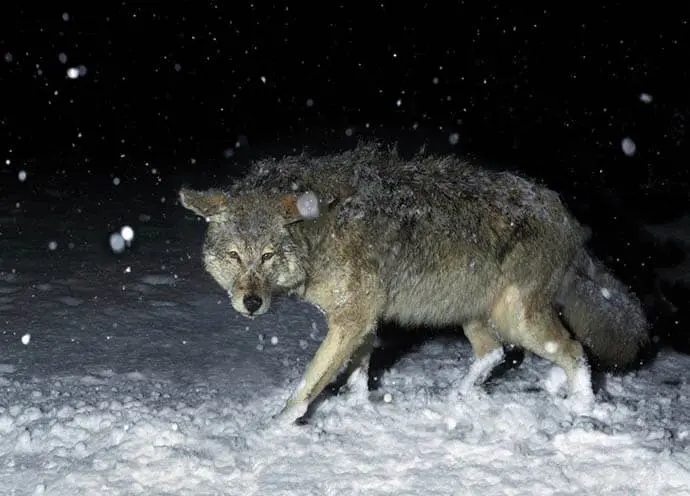
If you’ve ever wondered what does coyote poop looks like, you’re in luck. In this blog post, we’ll take a close-up look at coyote scat and explain what it can tell us about these fascinating animals. So keep reading to learn all about coyote poop!

If you’re new to hunting coyotes, you may be spending a lot of time trying to find the best place to set up your stand. It can be hard to find the perfect spot when you don’t have tons of experience to guide you, and hours in the stand with no ‘yote in sight can be pretty demoralizing.

FURTHER READING➜ 5 Of The Absolute Best Coyote Baits➜ Get That Pelt! How To Skin A Coyote➜ “When Is The Best Time To Hunt Coyotes?” Searching For The Perfect Shot

The easy answer to this problem is to hunt where there’s lots of coyotes. However, these guys are sneaky and aren’t always as easy to spot as some animals you may have hunted in the past.

With deer, for instance, some patience and observation will typically show you where they like to hang out and you can set up based on where you’ve seen them in the past.

When hunting sly prey–such as the coyote–you’ll need to find a different way to track them. A fairly reliable way to do this, especially with coyotes, is by learning to identify their scat(poop).

Have you ever wondered what coyote poop looks like? If so, you’re in luck! In this blog post, we’ll take a close look at coyote scat to see what it can tell us about these fascinating animals. Keep reading to learn more!

But, What Does Coyote Poop Look Like?

Read on for a simple but effective guide on how to identify most types of scat, that should give you a better handle on where your local coyotes like to spend their time.

Features To Look For When Identifying Coyote Scat

Size

Master The Call

Generally speaking, the size of an animal’s scat gives you some idea of how large the animal that produced it is.

Wolves, dogs, and coyotes are all related canids and have similarly-sized scat. For coyotes in particular this is going to be roughly an inch in diameter.

Depending on where you live, you may need to become an expert at telling the difference between the scat of wolves, dogs, and coyotes.

Otherwise, you could set up your stand in the middle of a wolf’s territory or end up with nothing but stray dog sightings to show for your hunting trip.

Unfortunately, that simply isn’t possible judging on size alone. The size is a great starting point, but not enough to tell you the difference between a large coyote and small wolf.

For that you’ll have to learn to take into account a few different defining aspects of scat.

Color

Coyote hunting

To the uninitiated, this may seem like a ridiculous thing to consider. After all, doesn’t just about every animal you’d hunt have brown scat? How will color help??

That objection simply means you need to practice, and become more discriminating when identifying scat. If you look closely, the color can tell you an animal’s diet which is a clue to their identity.

Still unsure? The next time you take your dog for a walk, take note of the color of their droppings. Then, when you find yourself in the forest near the scat of wild animals, note the color difference.

The scat of coyotes can vary in color based on their diet, but will typically be nearly black in color. This is partly because they are passing the blood of their prey.

Color can also give you a clue as to how fresh the scat is. If you are only finding scat the appears sun-bleached, lighter, or chalky in color, then you may have just missed the party.

Exposure to sun can lighten the color of scat fairly quickly. If you only see older scat then you may be looking in an area where coyotes used to congregate but have moved on for some reason.

Consistency

When identifying scat, taking note of the consistency can go a long way towards telling you which animal it came from. Is it soft, hard, pellets, tubular,etc?

Scat that comes in the form of pellets can be anything from a rabbit to an elk, but is certainly not left by a coyote. Disregard this type of scat, and look exclusively for the more tubular scat.

Again, all canids are going to have similar scat if you focus on just one aspect of the scat. To differentiate between wolves and coyotes, note the amount of moisture in addition to the overall texture created by shape.

Coyote scat is going to have a smoother appearance than that of a wolf. This is due to a greater moisture content, and also lends the coyote scat a slightly shinier appearance.

Related: Slingshot Hunting Rabbit – How To Hunt A Rabbit With A Slingshot

Contents

Wolf Howling At Full Moon

Beyond consistency, taking note of the actual contents of the scat can tell you something about what you’re looking at. This is especially useful for distinguishing stray dog from coyote.

If you look at dog dropping, they’re going to have a more uniform consistency–this is because they eat uniformly processed dog food, for the most part.

Coyotes tend to eat whatever they can find. This can be fruits and such on occasion, but is also usually primarily comprised of smaller animals that leave behind fur and bones in the scat.

This can also give you a clue as to how well a coyote is eating, which can have an effect on how easy they are to call out of hiding.

If you’re fairly certain that you’ve found coyote droppings, but they don’t seem to contain a whole lot of fur or bones, it may be a sign that the coyotes are having a hard time finding a heartier food source, making them more likely to investigate a wounded animal call when hunting.

Appearance:

Coyote scat is going to have a smoother appearance than that of a wolf. This is due to a greater moisture content, and also lends the coyote scat a slightly shinier appearance.

Shape

Coyote scat is typically tubular in shape, with a smooth appearance due to the greater moisture content.

The Smell of Coyote Poop:

Coyote poop typically doesn’t smell bad. It will have a more uniform consistency, and you’ll usually find fur and bones in the droppings.

What does coyote diet consist of?

Coyotes tend to eat whatever they can find. This can be fruits and such on occasion, but is also usually primarily comprised of smaller animals that leave behind fur and bones in the scat.

How can you tell if coyote poop is in your yard?

Coyote poop is typically tubular in shape, with a smooth appearance due to the greater moisture content. You’ll usually find fur and bones in the droppings. If you see this type of scat in your yard, it’s likely that coyotes have been around.

What should you do if you see coyote poop in your yard?

If you see coyote poop in your yard, it’s important to take steps to deter the coyotes from coming back. You can do this by making loud noises, spraying them with a hose, or using a motion-activated sprinkler. You may also want to consider installing a fence around your property.

Coyote scat characteristics :

-Tubular shape

-Smooth appearance

-Greater moisture content

-Slightly shinier appearance

-Uniform consistency

-May contain fur and bones

Where to find coyote poop ?

You can find coyote poop anywhere that coyotes live. This includes wooded areas, open fields, and even near urban areas. If you’re having trouble finding it, look for signs of prey such as fur or bones.

Consider Every Aspect

When first learning how to identify animal scat as a way to hunt more effectively, it is important to remember not to get stuck on just one defining feature. That’s how mistakes are made.

Think of it like a process of elimination. Color may point you in the right direction, while while size and consistency narrow the field as you consider the contents.

Together, these factors should give you all the information you need to properly identify coyote scat. Properly identifying those areas where coyotes are most active will give you a much more successful hunt.

If you aren’t sure about how this process looks in action, take a look at these videos that may help you in the identification process:

I hope you found this quick post helpful! Take a look at those videos if you need further clarification, and be sure to leave comments letting me know how the process works out for you in the end!

FAQ 

How do you tell the difference between coyote and dog poop?

Coyote poop is typically tubular in shape, with a smooth appearance due to the greater moisture content. You’ll usually find fur and bones in the droppings. If you see this type of scat in your yard, it’s likely that coyotes have been around. Dog poop, on the other hand, will vary depending on the size and breed of dog. It may be more crumbly in texture and contain less fur and bones than coyote poop.

What should you do if you see coyote poop in your yard?

If you see coyote poop in your yard, it’s important to take steps to deter the coyotes from coming back. You can do this by making loud noises, spraying them with a hose, or using a motion-activated sprinkler. You may also want to consider installing a fence around your property.

What does coyote diet consist of?

Coyotes tend to eat whatever they can find. This can be fruits and such on occasion, but is also usually primarily comprised of smaller animals that leave behind fur and bones in the scat.

What does a fox poop look like?

Fox poop is typically smaller in size than coyote or dog poop, and is more rounded in shape. It will also have a rougher texture due to the high level of fiber in the fox’s diet. Fox poop may also contain feathers and other small bones.

What does old coyote poop look like?

If you see coyote poop that is dry and crumbly, it’s likely that the scat is old. Coyotes typically only produce droppings once a day, so if you don’t see any new scat in the area, the previous droppings are likely from earlier in the day or the night before.

How do you know if a coyote is around?

If you see coyote poop in your yard, it’s likely that the coyotes have been around. You can also look for other signs of their presence, such as tracks or scat. If you hear howling or yipping at night, that is also a good indication that coyotes are in the area.

What should you do if you see a coyote?

If you see a coyote, it’s important to stay calm and not make any sudden movements. Slowly back away from the animal and make sure not to turn your back on it. If possible, make yourself appear larger by waving your arms or opening up a jacket. You can also try to scare the coyote off by making loud noises or throwing objects in its direction. If all else fails, you can try to fight back with pepper spray or a stick. Remember, however, that coyotes are wild animals and can be dangerous, so use caution and always err on the side of safety.

Filed Under: Coyote Hunting 04:40 by Kevin Steffey

14 of the Best Deer Baits (#5 Will Surprise You!)

14 of the Best Deer Baits (#5 Will Surprise You!)

It can be a bit confusing to determine the best deer bait to use while you’re out hunting. If you’re in an area where it’s legal to bait deer, however, it can be one of the best ways to ensure that you come home with a used tag and some fresh venison.

Related:How Much Meat From a Deer-Quick and Easy Way to Estimate Venison Yields

There’s a wide range of different things that hunters use, and if you’re new to hunting it can all be a bit confusing. I’m here to show you how to reduce that confusion and get you started on ensuring you make a clean harvest with minimal fuss.

7 of the Best Deer Baits

1.) Apples

Apples are a great way to get your whitetails near your stand, and they’re particularly favored by bow hunters in most regions since rifle season usually starts after most of the apples are gone.

Related:How to Get Deer to Come to You in 6 Easy Steps

In many places, particularly the Northeast US they’re a treat that offers your prey something out of the ordinary. The novelty of the apple as well as them being a sweet fruit makes them rather alluring for the animal.

If you have access to private property to hunt on, some hunters with an eye on the long term even make small apple orchards as “food plots” designed to attract the deer to the area each year.

Related:How To Attract Deer Fast- 6 Steps That Will Have You Attracting Whitetail Like A Pro

This can help to keep the deer around and get them used to an annual schedule which will allow you to easily find them when that time of year rolls around.

Pretty much any kind of apples will work, even crab apples. You can either set down a pail some distance from your stand or plant some of the trees on your own land which might require some knowledge about growing the trees. Either way, apples are a great way to get the deer coming to you.

2.) Corn

17653 two color corn pv Copy 2 2

Corn has long been a favored bait for deer, and it’s primarily used in dedicated feeders as scattering it on the ground can be both expensive and ineffective. You want to habituate the animals to coming to your feeder in the off-season if it’s on your property and then you can move in and make your harvest.

Feeders can be expensive, and many hunters have taken to using a home-made solution in order to avoid the extra expense. Commercial feeders can do a lot of tricky things, but all you really need in most situations is a gravity-fed system which will keep them coming back.

Remember that when people talk about using a bait pile, they’re not actually talking about a pile but instead about spreading the food over a fairly wide area. You’ll have a lot more success with this method, especially with corn.

Now, one thing about corn is that it can be considered bad for the deer. If you’re using it in the late season after they’ve primarily been eating woody roughage the microorganisms in their stomach can’t keep up and it can cause a number of fatal conditions.

Aflatoxins are also a concern, while not generally fatal to deer they can kill game birds and other animals so be sure to pick up your pile when you leave the area.

Read More: Best Rubber Hunting Boots

3.) Chestnuts

Chestnuts were a common plant in the American East until they were killed off by a disease known as Chestnut blight. Some hunters claim that deer in these regions are still genetically programmed to eat chestnuts over everything else, and a lot of hunters have reported a great amount of success with using them.

Chestnuts can be a bit expensive, but they last for a long time and if you use them with a feeder you may only need to refill it once or twice through the whole season.

You might even want to consider growing them yourself, hybrid species which are resistant to blight are available and they make good eating for humans too if you end up with an excess of them.

There are some rumblings that deer may not be used to them anymore from some people, and deer in the West were never used to them anyways so they’re primarily a regional bait for the East. Give them a shot, though, some hunters swear by them.

Related:What Do Deer Eat In The Winter? – The Best Facts

4.) Acorns

acorn 1013486 960 720 2 2

Acorns are frequently used by hunters to make bait piles. These hardy little nuts are available almost everywhere, and deer will readily accept them as food. The best acorns to use are definitely ones that aren’t on the land you’re using to hunt since it will add variety to the deer’s diet.

You can collect them quite easily and if you pay attention to the trees in your area you’ll be able to figure out which ones are new. Typically deer will prefer those lower in tannic acid, but if the area you’re hunting in is already flush with white oaks you may be able to get some takers with something a little bit more bitter.

When there’s a great season for acorns, you may want to take note of where the best feeding locations are for deer because they’ll likely ignore your bait pile in favor of the wild acorns dropping. It’s not quite baiting, but if you know where your prey is eating you’ll be able to locate them more easily.

Acorns are the preferred bait of a lot of hunters and a much safer alternative to corn as well. They can be stored for long periods, and those who choose to use them often find quite a bit of success with the humble oak seed.

5.) Salt

While not exactly food, salt is hard to come by for deer in the wild. Some folks choose to scatter it on the ground, while others will use commercially available “licks” designed for livestock and horses in order to get the deer to come around.

There’re a couple of bonuses to using salt over more traditional baits as well. The first is that the mineral content will help to keep the deer in your hunting area healthy, which is good for you. Healthy deer and bigger and taste better.

The more obscure advantage is the fact that in some states where baiting isn’t legal, the use of minerals to attract deer isn’t actually considered baiting. As always, you’ll want to make sure that you check the laws in your area, though, as some sites forbid using minerals to attract deer entirely.

The last fringe benefit of using salt or other minerals is that it can help to attract a higher deer population to your own private property during the warmer months and with a few strategically placed licks you’ll be able to know where the deer like to hang out on your property.

It’s not traditional bait, but it can make a huge difference in your hunting experience.

6.) Sugar Beets

sugar beet 837810 960 720 2 2

A lot of hunters swear by sweeter fruits and vegetables, and sugar beets come highly recommended as a great bait to get the whitetails where you can hit them from the stand. A lot of animals will actively seek out fruit with a high sugar content, and deer are no exception.

You can use these pretty much the same way as you’d use apples. Either spread them out or set up a bucket where they can get at them and let the waiting game begin. You’re sure to be able to nab a big buck over your pile with a little bit of patience.

They also make a great crop to use for food plots in places where a pile isn’t legal. They’re especially useful when they’re not native to the area since the deer will be intrigued by the novelty of the delicious vegetable. If the deer don’t eat them… well, they go great in a lot of recipes.

Give them a shot, they’re sure to attract your prey.

7.) Home Made Mixes

If all else fails, there’s plenty of recipes readily available online that can help you find the perfect mix of ingredients in order to attract your deer. These recipes can vary widely from region to region, and hunter to hunter and require a lot more preparation than most of the baits we’ve detailed so far.

white tailed deer 949423 960 720 2 2

That said, humanity’s engineering minds can often make up for deficiencies in nature with creative tactics. If you’re the DIY type and want to make sure that you’re super-efficient in your baiting tactics then mixing up your own attractants is definitely the way to go.

Give it a shot, you’re bound to be able to come up with something that works amazingly well and increases your potential for harvesting a prize-winning buck this season.

8.Cranberries

One of the most overlooked foods that deer love are cranberries. Most people think of deer as eating mainly grass, but cranberries are actually a very important part of their diet. Cranberries are high in nutrients and can help keep the deer population healthy.

Cranberries are also a great bait to use when hunting because they are so easy to store and transport. You can simply put them in a bag and take them with you into the woods. When you’re ready to bait your area, just scatter them around and wait for the deer to come to you.

9.Pumpkins

Another food that deer love is pumpkins. Pumpkins are a great bait to use because they are easy to find and inexpensive. You can either use the whole pumpkin or just the guts. If you’re using the whole pumpkin, just cut a hole in the top and scoop out the seeds. If you’re using the guts, just remove them from the pumpkin and put them in a bag.

When you’re ready to bait your area, just spread the guts or seeds around and wait for the deer to come to you.

10.Molasses

Molasses is another great bait to use when hunting deer. It is a great attractant because it is very sweet and has a strong scent. Deer love the taste of molasses and will be drawn to it from far away.

Molasses is also very easy to use as a bait. You can simply pour it on the ground or on a log and the deer will find it. You can also add molasses to other baits to make them more attractive to deer.

11.Buckwheat

Buckwheat is another great food that deer love. Buckwheat is high in protein and is a great source of nutrition for deer. Buckwheat is also very easy to grow, so you can grow your own supply and use it as bait.

When you’re ready to bait your area, just scatter the buckwheat around and wait for the deer to come to you. Buckwheat is also a great food to use in food plots.

12.Peanut Butter

Peanut butter is another great bait to use when hunting deer. It is a great attractant because it is very sweet and has a strong scent. Deer love the taste of peanut butter and will be drawn to it from far away.

Peanut butter is also very easy to use as a bait. You can simply pour it on the ground or on a log and the deer will find it. You can also add peanut butter to other baits to make them more attractive to deer.

13.Chestnuts

Chestnuts are another great food that deer love. They are a great source of nutrition for deer and are also very easy to find. Chestnuts are also very easy to use as a bait. You can simply put them on the ground or in a bag and the deer will find them.

14.Mint

Mint is another great food that deer love. It is a great attractant because it has a strong scent. Deer love the smell of mint and will be drawn to it from far away.

Mint is also very easy to use as a bait. You can simply put it on the ground or in a bag and the deer will find it. You can also add mint to other baits to make them more attractive to deer.

Deer Bait Station Types

1. The Gravity Feeder

The gravity feeder is the most common type of deer bait station. It consists of a hopper that is filled with deer bait, and a feeding tray that the deer can access. When the deer eat from the feeding tray, they will push down on the lever, which will cause more bait to fall into the hopper. This will allow the deer to continue to eat without having to walk back to the hopper.

2. The Automatic Feeder

The automatic feeder is a type of deer bait station that automatically dispenses deer bait. It consists of a feed container that is filled with deer bait, and a motor that rotates the feed container so that the deer can access the bait. The automatic feeder will dispense a small amount of bait each time it is activated, which will allow the deer to eat without having to walk back to the feeder.

3. The Tripod Feeder

The tripod feeder is a type of deer bait station that can be hung from a tree or other structure. It consists of a hopper that is filled with deer bait, and a feeding tray that the deer can access. The tripod feeder is designed so that when the deer eat from the feeding tray, the weight of the deer will cause the feeder to rotate, which will bring more bait into the feeding tray.

4. The Barrel Feeder

The barrel feeder is a type of deer bait station that can be used to feed multiple deer at the same time. It consists of a barrel that is filled with deer bait, and a feeding tray that the deer can access. The barrel feeder is designed so that when the deer eat from the feeding tray, the weight of the deer will cause the barrel to rotate, which will bring more bait into the feeding tray.

5. The Spinner Feeder

The spinner feeder is a type of deer bait station that can be used to feed multiple deer at the same time. It consists of a spinning plate that is filled with deer bait, and a feeding tray that the deer can access. The spinner feeder is designed so that when the deer eat from the feeding tray, the weight of the deer will cause the plate to spin, which will bring more bait into the feeding tray.

When choosing a deer bait station, it is important to choose one that will meet your needs. By choosing a gravity feeder or an automatic feeder, you can ensure that the deer will have access to deer bait at all times. If you are hunting with multiple people, then you may want to consider a barrel feeder or a spinner feeder, which will allow multiple deer to eat at the same time.

How to Use Deer Baits

Now that you know about some of the best deer baits to use, it’s time to learn how to use them. When using deer bait, there are a few things you need to keep in mind.

1. Choose the Right Bait

The first thing you need to do is choose the right bait for your area. You want to choose a bait that is easy to find and inexpensive. You also want to choose a bait that is high in protein.

2. Place the Bait in the Right Place

You also need to place the bait in the right place. You want to place the bait in an area where deer are likely to visit. You can either place it in a pile or scatter it around.

3. Check the Bait Regularly

You also need to check the bait regularly. You want to make sure that the bait is fresh and that deer are still visiting the area. If you notice that the bait is getting old or that deer are no longer visiting the area, you may need to replace it.

4. Be Patient

Finally, you need to be patient. It may take some time for deer to find the bait. Once they do, they will keep coming back for more. Just be patient and wait for them to come to you.

5. Enjoy Your Hunt

Once you have baited your area, it’s time to enjoy your hunt. Remember to follow all hunting regulations and always practice safe hunting. Good luck and happy hunting!

The Best Locations for Deer Bait and Feed Sites

Deer bait and feed sites should be located in areas where deer are likely to congregate. Some good locations include:

1. Near a water source – Deer love to drink, and they will often congregate near water sources. This is a great place to set up your deer bait and feed site.

2. In an open field – Deer like to browse in open fields, so this is another great location for your bait and feed site.

3. Near a forest edge – Deer love to eat young trees and shrubs, so setting up your bait and feed site near the forest edge is a good idea.

4. In a sheltered area – Deer like to take shelter from the wind, so setting up your bait and feed site in a sheltered area is a good idea.

5. On a hilltop – Deer like to browse on hilltops, so this is another good location for your bait and feed site.

6. Near a road – Deer will often travel along roads, so setting up your bait and feed site near a road can be effective.

7. In an agricultural area – Deer love to eat crops, so setting up your bait and feed site in an agricultural area can be successful.

When choosing a location for your deer bait and feed site, it is important to consider the deer’s natural habits and preferences. By understanding where deer like to spend their time, you can choose a location that will be more likely to attract them.

Hunting Setups Over Bait

1. The Blind Overlook

One hunting setup you can use over bait is the blind overlook. To do this, you will need to find a high spot overlooking the bait site. You can then set up a blind on this high spot and wait for deer to come to the bait.

2. The Stalk

Another hunting setup you can use over bait is the stalk. To do this, you will need to find a location downwind of the bait site. You can then wait for deer to come to the bait and stalk them from this downwind location.

3. The Drive

Another hunting setup you can use over bait is the drive. To do this, you will need to have two or more hunters. One hunter will set up downwind of the bait site and the other(s) will set up upwind of the bait site. When a deer comes to the bait, the hunter downwind will drive the deer towards the hunter(s) upwind.

4. The Snipe

Another hunting setup you can use over bait is the snipe. To do this, you will need to find a location where you can see the bait site but the deer cannot see you. You can then wait for deer to come to the bait and shoot them from this hidden location.

5. The Ambush

Another hunting setup you can use over bait is the ambush. To do this, you will need to find a location near the bait site where you can conceal yourself. You can then wait for deer to come to the bait and shoot them from this concealed location.

When hunting over bait, it is important to use a setup that will allow you to ambush the deer. By using a concealed location near the bait site, you will increase your chances of getting a successful shot.

When to bait deer

1. Early Fall

The best time to bait deer is early fall, when the deer are starting to transition from summer to winter. At this time, the deer will be looking for food to help them prepare for the winter months. By using a deer bait station, you can provide the deer with an easy source of food that will help them to survive the winter.

2. Late Fall

The best time to bait deer is late fall, when the deer are in the process of preparing for winter. At this time, the deer will be looking for food to help them build up their energy reserves for the winter months. By using a deer bait station, you can provide the deer with an easy source of food that will help them to survive the winter.

3. Winter

The best time to bait deer is during the winter, when the deer are struggling to find food. At this time, the deer will be looking for any source of food that they can find. By using a deer bait station, you can provide the deer with an easy source of food that will help them to survive the winter.

4. Spring

The best time to bait deer is during the spring, when the deer are starting to transition from winter to summer. At this time, the deer will be looking for food to help them rebuild their energy reserves for the summer months. By using a deer bait station, you can provide the deer with an easy source of food that will help them to survive the summer.

Conclusion

As you can see, the best deer baits are a diverse lot and you’ll probably want to engage in some experimentation to determine what works best for the deer in the area you’re hunting in.

Make sure you check regulations in your state and know that baiting is illegal on any federally managed land in the US because the fines can be hefty.

Far from cheating, however, the use of baits is simply another strategic element in the harvest of venison, and you’ll find it can change your trips significantly.

Like our article? Have your own tips and tricks for the perfect bait? Let us know in the comments!

FAQ About Best Deer Baits

1. What attracts deer the most?

The scent of other deerDeer have a keen sense of smell and will follow the scent trail that they associate with food. If there is enough moisture in the air, their nose can even pick up flowers and vegetation from miles away. As long as humans don’t put out bait specifically for them – they’re most attracted to deer pee!

2. What is irresistible to deer?

Well, we can’t precisely be saying.

But we do know that the frequency of scents and other stimuli (rubberized bands and other noisemakers) is generally used to direct deer away from desired areas.

One other idea: it’s been speculated that deer may not respond well to many of the common repellants because they don’t have a strong sense of smell for skunk or fox urine. Deer might be able to detect such smells as threats, but not as deterrents if they don’t carry much meaning for them. However, there’s no hard data so this is just speculation until the next study shows up!

3. What is the best homemade deer attractant?

It all really depends on what you like and how you feel it tastes.Some people feel strongly about Skittles; chocolate; apples; barbecued ribs; vanilla extract, etc., but it’s hard to say definitively, and no science has been done on this topic.

Personally speaking though, I like the taste of dried meat (though I admit that it smells bad), and am fond of earthworms soaked in apple juice or cherry syrup mixed with a little bit of water.

Stir for a couple hours, add sugar if needed to get sweetener levels correct, freeze until solid so nobody can see them when they’re put out on bait piles.

4. What is the best time to bait deer?

The answer to this question depends on a few factors, including what type of bait you are using, and what your goals for baiting deer are.

In general, the best time to bait deer is in the late summer or early fall, when the deer are starting to prepare for winter. At this time, the deer will be looking for food to help them build up their energy reserves for the winter months. By using a deer bait station, you can provide the deer with an easy source of food that will help them to survive the winter.

5. Where can I buy deer bait?

You can purchase deer bait at most hunting supply stores, or online from a variety of retailers. You can also make your own deer bait using ingredients that are attractive to deer, such as corn, apples, or other fruits and vegetables.

6. How do I make deer bait?

To make your own deer bait, you will need:

– 1 part molasses

– 1 part cornmeal

– 1 part flour

– 1/2 part salt

-Water

Mix all ingredients together in a bowl, adding water until the mixture is the consistency of dough. Form into balls or patties, and place on a baking sheet. Bake at 200 degrees for 30 minutes, or until the baits are hard and dry. Store in an airtight container in a cool, dry place.

9. What is the best way to store deer baits?

Deer baits should be stored in a cool, dry place in an airtight container. Bait stations should be placed in areas where they will not be accessible to other animals, such as bears or raccoons. Deer baits will keep for up to 6 months if stored properly.

10. Can I use deer bait to hunt deer?

Yes, you can use deer bait to hunt deer. By placing deer bait in a designated hunting area, you can attract deer to within range of your rifle or bow. Be sure to follow all hunting regulations in your area, and only hunt during the appropriate season.

11. What are the consequences of using too much deer bait?

If you use too much deer bait in an attempt to increase your chances of success while hunting, you may end up attracting more deer than you can safely hunt. This can lead to overcrowding and competition for food, which can ultimately damage the deer population. It is important to use deer bait responsibly, and only in areas where it is legal to do so.

12. What are the consequences of using fake deer bait?

If you use fake deer bait in an attempt to attract deer for hunting, you may end up causing more harm than good. Fake deer bait can be mistaken for real deer bait by deer, which can cause them to become attracted to populated areas where they may come into contact with humans and domestic animals. It is important to use fake deer bait responsibly, and only in areas where it is legal to do so.

13. What are the consequences of using deer bait without a license?

If you use deer bait without a hunting license, you may be subject to legal penalties. In some states, it is illegal to use deer bait for hunting without a valid hunting license. Be sure to check the laws in your state before using deer bait for hunting.

14. What are the consequences of using deer bait in a baited area?

If you use deer bait in a baited area, you may be subject to legal penalties. In some states, it is illegal to place deer bait within a certain distance of a road or trail. Be sure to check the laws in your state before using deer bait in a baited area.

15. Can I use deer bait on public land?

Yes, you can use deer bait on public land if it is legal to do so in your state. Be sure to check the laws in your state before using deer bait on public land. You may also need to obtain a permit from the land manager.

16. Can I use deer bait on private land?

Yes, you can use deer bait on private land if it is legal to do so in your state. Be sure to check the laws in your state before using deer bait on private land. You may also need to obtain permission from the landowner.

17. What are the consequences of using expired deer bait?

If you use expired deer bait, may be subject to legal penalties. In some states, it is illegal to use deer bait that has expired or is no longer fresh. Be sure to check the laws in your state before using expired deer bait.

18. What are the consequences of using a banned deer bait?

If you use a banned deer bait, you may be subject to legal penalties. Some states have outlawed the use of certain types of deer bait, while others have placed restrictions on the amount or type of bait that can be used. Be sure to check the laws in your state before using a banned deer bait.

19. What bait attracts deer the most?

There is no single bait that will attract deer more than any other, as each deer has its own individual preferences. In general, however, sweet baits such as apples, carrots, or molasses are often effective in attracting deer. You may also want to try using a pheromone-based deer attractant, which can be placed on vegetation or trees in order to attract deer to the area.

20. What is the number 1 deer attractant?

There is no single deer attractant that is guaranteed to be effective in attracting deer. However, some common attractants include sweet baits such as apples, carrots, or molasses; pheromone-based deer attractants; and commercial deer feed. You may need to experiment with different types of attractants in order to find one that is effective in your area.

21. What should I use to bait deer?

There is no one-size-fits-all answer to this question, as each deer has its own individual preferences. However, in general, sweet baits such as apples, carrots, or molasses are often effective in attracting deer. You may also want to try using a pheromone-based deer attractant, which can be placed on vegetation or trees in order to attract deer to the area.

22. How do you attract deer quickly?

There is no single answer to this question, as each deer has its own individual preferences. However, in general, sweet baits such as apples, carrots, or molasses are often effective in attracting deer. You may also want to try using a pheromone-based deer attractant, which can be placed on vegetation or trees in order to attract deer to the area. Additionally, you can increase the chances of attracting deer by keeping your bait site clean and well stocked with food.

[tcb-script type=”application/ld+json”]{ “@context”: “https://schema.org”, “@type”: “FAQPage”, “mainEntity”: [{ “@type”: “Question”, “name”: “1. What attracts deer the most?”, “acceptedAnswer”: { “@type”: “Answer”, “text”: “The scent of other deerDeer have a keen sense of smell and will follow the scent trail that they associate with food. If there is enough moisture in the air, their nose can even pick up flowers and vegetation from miles away. As long as humans don’t put out bait specifically for them – they’re most attracted to deer pee!” } },{ “@type”: “Question”, “name”: “2. What is irresistible to deer?”, “acceptedAnswer”: { “@type”: “Answer”, “text”: “Well, we can’t precisely be saying.But we do know that the frequency of scents and other stimuli (rubberized bands and other noisemakers) is generally used to direct deer away from desired areas.One other idea: it’s been speculated that deer may not respond well to many of the common repellants because they don’t have a strong sense of smell for skunk or fox urine. Deer might be able to detect such smells as threats, but not as deterrents if they don’t carry much meaning for them. However, there’s no hard data so this is just speculation until the next study shows up!” } },{ “@type”: “Question”, “name”: “3. What is the best homemade deer attractant?”, “acceptedAnswer”: { “@type”: “Answer”, “text”: “It all really depends on what you like and how you feel it tastes.Some people feel strongly about Skittles; chocolate; apples; barbecued ribs; vanilla extract, etc., but it’s hard to say definitively, and no science has been done on this topic.Personally speaking though, I like the taste of dried meat (though I admit that it smells bad), and am fond of earthworms soaked in apple juice or cherry syrup mixed with a little bit of water.Stir for a couple hours, add sugar if needed to get sweetener levels correct, freeze until solid so nobody can see them when they’re put out on bait piles.” } }]}[/tcb-script]

Filed Under: Deer Hunting 03:07 by Kevin Steffey

  • « Previous Page
  • 1
  • …
  • 10
  • 11
  • 12
  • 13
  • 14
  • …
  • 48
  • Next Page »
  • Best Shooting Rest Reviews For A Perfect Hunting – Best Shooting Rests Reviews
  • Hunting Safety: 5 Best Treestand Safety Harnesses Reviewed
  • How Fast Can A Deer Run – How Hard Would It Be To Catch A Frightened Deer On The Run
  • Rice Bran for Deer- How to Effectively Use Rice Bran to Attract a Deer?
  • The Best Reloading Scale for Consistent Accuracy
  • Which Shotgun Choke Is The Most Open?
  • 17hmr vs 22lr: Which one Should You Use?
  • 5 Top Coyote Hunting Dogs That Are Proven To Be Tremendous Hunters
  • Best Shot Timer: Things to Know About the Top 10 Great Shot Timers
  • Elk Hunting 101: 5 of the Best Elk Hunting Boots

DMCA.com Protection Status

Deerhuntingfield.com is a participant in the Amazon.com Services LLC Associates Program, an affiliate advertising program designed to provide a means for sites to earn advertising fees by advertising and linking to Amazon.com. Additionally, deerhuntingfield.com participates in various other affiliate programs, and we sometimes get a commission through purchases made through our links.