Deer Hunting Field

Hunting Blog

  • Hunting
    • Best Coon Hunting Lights
    • Best Treestand Safety Harness
    • Best Hunting Boots
    • Best Rubber Hunting Boots
    • Best Muck Boots For Hunting
    • Best Treestand Safety Harness
    • Best Hunting Spotlights
    • Best Elk Hunting Boots
  • Archery
    • Best Arrow Rest
    • Best Bow Sights
    • Best Single Pin Bow Sight
  • Gun, Shooting & Accessories
    • Best Bipod for Long Range Shooting
    • Best Scope For Ar 10
    • Best Shooting Rest
    • Best AR 15 Bipod
    • Best AR 15 Slings
    • Best ACOG Clone
    • Best Shot Timers
    • Best Rifle Bipods
    • Best Shooting Tripods
  • Survival
    • Survival Shelter
    • Finding and Purifying Water in the Wilderness
  • About Us

How To Hold A Rifle Steady – The Best Way To Hold A Rifle Steady

How To Hold A Rifle Steady – The Best Way To Hold A Rifle Steady

Are you holding a rifle steady enough? Whether you are sports shooting or hunting, aiming is a necessary part of obtaining the perfect shots. However, it is quite difficult to aim appropriately if you are not able to hold the rifle steady in a way to aim reliably.

Instead of battling to maintain your eyes on your stamp with a coggling rifle barrel, it is a smart thought to figure out how to hold a rifle steady in order to be able to simply count on obtaining the accurate aim. In this article, we will also discuss the right habit you need to hold a rifle steady and some other related matters you need to hold a rifle correctly. So read on.

Creating The Right Habits

fixed-scopes

Figuring out how to hold a rifle relentless involves a thorough training so as to hold your rifle correctly. Doing this means teaching yourself again and again how to hold a rifle correctly for your muscles to consequently accept the correct positions later on. It will require time to get the correct strategies set up, but once you eventually get it, you should have the capacity to hold your rifle unfaltering in any conditions.

An ideal approach to prevail in this shooting area is to utilize the time you require and figure out the correct habits, regardless of the possibility that it implies totally retraining you on the most proficient method to hold the rifle and aim accurately. If you begin sliding once again into a poor hold or in the event that you attempt to execute some steadying methods to your present poor hold then you will not discover the same level of accomplishment.

Figure out how to do it correctly, and then educate your body to keep on doing that as your normal hold all the time. After creating the right habit you need to hold a rifle correctly then you now need to learn the basic steps involved in holding your rifle steady.

How To Hold A Rifle Steady

Step one: Build Up Your Steady Position.

For an accurate aim, you are expected to hold your rifle steady enough even if a mallet falls on the barrel. By learning these essential fundamental steadying procedures, you should have the capacity to hold your sights steady enough in any position.

Teach yourself diverse positions to discover what works perfect and comfy for you. The rested position, comfortable for few shooters, is not comfortable for shooters with awful hips. In case you are a righty, you will need to fire with your right hand and the hand that is not firing is your left hand and the other way around.

Related: The Best Shooting Rest Reviews For A Perfect Hunting – Top Rated Shooting Rest

However, eye predominance additionally is also a factor. Mostly, with shoulder-discharged firearms, you line up on the dominant eye side. This is also valid for cross-predominant shooters — individuals who are lefties or righties and prevailing in the inverse eye.

Build Up Your Steady Position.

Step two: Steady The Handgrip With Your Non-Shooting Hand

The hand guard of the rifle should seat in the “V” made by your thumb and index fingers. The handgrip needs to be light, similar to a terrible handshake, and the wrist needs to be candid with the fingers twisted generally about the handguard.

The hand that is not firing should make the rifle steady just like the non-firing hand in basketball game should steady the ball. The majority of the rifle’s support should originate from your shooting hand and your body position, but the hand that is not firing is for steadiness. Avoid potential risk to always keep your hand clear of the actions of the rifle and ejected shells.

Step three: Put the Rifle Butt In Your Firing Shoulder’s Pocket

Another step is to put the rifle butt immovably in your firing shooting shoulder’s pocket. Ensure that the butt is stationed against your firing shoulder, not on your collarbone, or the meaty part of your armpit underneath it.

Keeping the rifle butt firmly in the shoulder’s pocket enables the recoil to be consumed by your entire body, instead of snapping once again into your shoulder, therefore making for an agonizing and inaccurate shot.

Step four: Hold The Pistol Grip With Your Shooting Hand

Contingent upon the sort of rifle you are using to shoot, you will be holding either a tampered shotgun-style or full pistol grip. Notwithstanding, your grasp on the rifle need to be firmer compared to your non-shooting hand, more similar to a friendly handshake.

There ought to be some retrogressive draw on the grasp, pulling the back of the rifle solidly into your shoulder. This guarantees that when you are prepared to shoot, gripping the trigger will not make the rifle move and shake your exactness.

Your trigger finger needs to be straight. Try not to twist it around the trigger till you are prepared to shoot. Lay it on trigger guard side, or utilize it with the other fingers to hold the stock.

Step five: Keep Your Elbows In And Down

Another step is to keep your elbows in and down. Your elbows will be set fairly distinctively relying upon whether you are standing, seated or inclined, however, all positions require that your elbows should remain underneath the rifle to bolster its weight. Imagine a cord linked your elbows in the direction of your hips, drawing them in the direction of your focal point of gravity.

Step six: Unwind Your Neck And Allow Your Cheek To The Stock

The next step is to relax your neck and allow your cheek fall normally to the stock. This is in some cases known as “cheek-to-stock weld,” and it can be gotten by conveying your nose toward the charging handle on a few rifles. Steady cheek-to-stock weld will guarantee that your eye adjusts normally to the rifle sight and that you do not need to utilize your fringe vision to strain and target.

air rifle with telescopic sight for sport hunting

Step seven: Relax Your Body

This is the final step on how to hold your rifle steady. With appropriate strategy, you should have the capacity to unwind your body and expect a quiet breathing cadence.

Your handgrip ought to be tight on the rifle without being stretched. In case you are utilizing your muscles to grip a rifle, surely they will get tired and your exactness will falter.

Getting into relaxed, comfortable position is an ideal approach to shooting precisely.

Stand With Hunting Rifles With Telescopic Sights. Weapon

How To Know When You Are Doing It In The Right Way

In case you are not certain as to whether you have the stance down or not, put forth these questions to yourself:

1- Is Your Body Relaxed?

On the off chance that your muscles feel strained and are having sore rapidly, you are most likely not in the correct position. Your muscles ought not to be strained hard as though you are working out. Keep in mind to utilize the body positioning to bolster the firearm, so you do not need to tense that extent to keep it set up.

2- Are You Able To See Effortlessly Through The Sites Or Scope?

If it is quite hard for you to see the sites, it implies that your head might be in the incorrect position. Rifle sites are designed to be at a convenient position for you to check whether you unwind your neck muscles and keep it against the knob of the firearm.

3- Are You Aiming Admirably?

How well would you say you are hitting your objective? While this could be your rifle itself or wrong targeting, there is likewise a possibility that conflicting shooting is because of an ineffectively held rifle. In case you are not keeping the rifle steady to a great extent, your gunshots will be extremely conflicting.

4- How Is Your Breathing Beat?

When you have a proper body positioning, you won’t battle to hold the rifle unfaltering, so you will have the capacity to inhale well. In the event that your breaths are flimsy and conflicting, check your stance and release your muscles when you attempt to hold the rifle once more.

Conclusion

I believe you really enjoy this content. Utilizing a rifle takes tolerance and great skill if you are striving to put forth a valiant effort.

Figuring out how to hold a rifle steady can unfathomably enhance your aim and offer you a great possibility of hitting your target when you shoot your rifle.

Rehearsing the methods discussed above can lessening your stress on your way to getting an accurate shot with an unfaltering aim. For further inquiries, you can comment below.
Filed Under: Gun, Shooting & Accessories 19:57 by Kevin Steffey

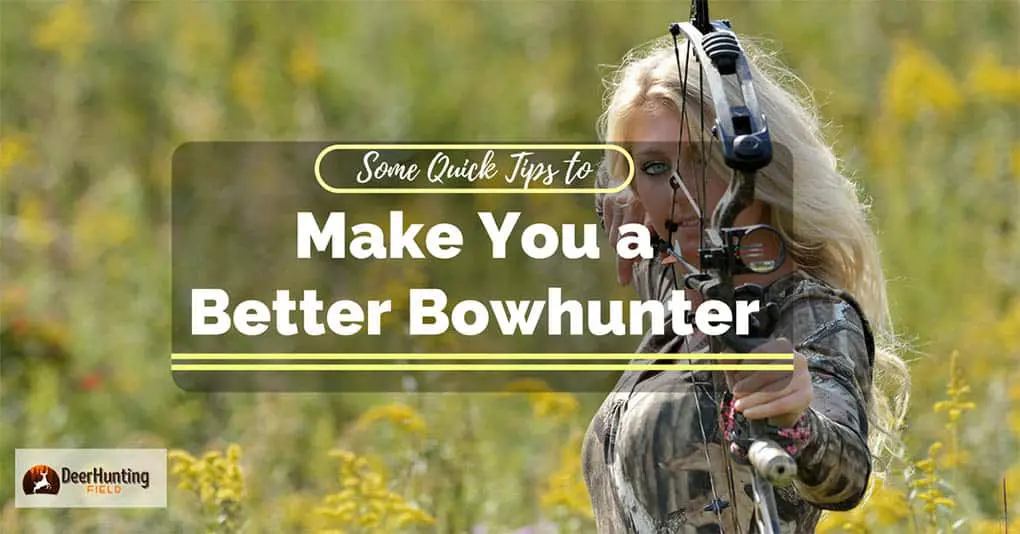
Bow Hunting Tips- Some Quick Tips to Make You a Better Bowhunter

Bow Hunting Tips- Some Quick Tips to Make You a Better Bowhunter

When it comes to bowhunting, there’s such a wide variety of equipment and techniques available that it can be hard to give people truly valuable advice about things, whether it’s how to build a treestand or what arrow to use.

Instead it’s usually better to take general tips, and try to extrapolate them to your own style whatever it may be. If you haven’t found it yet, you’ll want to find yours before you really try to take any advice. In this case it’s often a good idea to find a mentor, until you’ve truly been in the field yourself knowledge doesn’t amount to much.

That said, here are some general hints which might help any hunter, although they’re mainly geared towards stand hunters like myself. 

Scouting the Location

bow hunting

Before the season even begins you’ll want to know the area quite well. There’s a lot of stuff that goes on in the woods, and if you’re under the impression you can just walk into any forest and find a buck you’re going to be disappointed.

One of the best things to do is to move carefully through the woods, looking for the various signs that deer, and particularly bucks, leave in their wake. This includes the animal trails, rubs, signs of past deer and where their food and water will be located.

The best way to go about this is on foot, slowly but surely make your way all through the area in the off-season. It’s a great way to be outdoors and getting set up for the thrill of the chase once the whole thing is ready to go.

Use Food Plots

Wherever you’re hunting, it’s a good idea to plant food plots. It’s definitely not unsporting, and if you have access to a property you maintain year-round you’re actually adding to the health of the deer population. You’ll find that deer prefer different foods in different seasons, and a lot of it will depend on your area.

Related: Best Deer Hunting States-Go on a Trip: Here’s the Best 7 States for Whitetail

Don’t just plant them around your stands though, plant them regularly along established deer trails and you’ll be able to make sure the deer have a varied and complete diet. They’ll be healthier and more active, and you’ll have a much better chance of scoring a big one when they come to feed.

Safety! Always!

Untitled 2

While you might not have as dangerous of a weapon as riflemen, it’s important to always be safe. This means a quality quiver, never shooting when you don’t know where a miss will go, and in the case of stand hunting you’re going to be using a safety harness.

Related: Hunting Safety: Picking the Best Treestand Safety Harness

Don’t let machismo trick you into not doing this, more hunters are killed by falls than almost anything else every year. Be safe! It does you no good to tag a big whitetail if you fall on your head during the process.

Practice, Practice, Practice

Practicing your form is an essential part of the hunt. In all honesty, hunting is such a complicated art that some archers eventually forget that they also have to be able to shoot well. You’ll find this attitude is especially prevalent among hunters who use very accurate and easy to shoot modern equipment.

A bad shot is worse than a complete miss, you’ll cause the deer unnecessary suffering and might even lose it entirely as well. Keep your form sharp, and make sure you can shoot at a wide variety of distances. Even if you don’t want to carry a rangefinder in the field, invest in one and use it to make sure you can hit a target from a variety of areas.

bow hunting practise

Patience

Novice hunters will often blow a sure thing by acting too soon. A large part of hunting is knowing when and where to take a shot, nearly as large a part as being able to take the shot with confidence anyways. Let the deer get nearer, or into a more open area, or however things need to pan out rather than popping off your arrow earlier.

Related: Top 5 Best Arrow Rest For An Amazing Hunting Adventure – Best Drop Away Arrow Rest Reviews

You’ll do a lot better with some patience, and it can be hard to develop, but do your best and you’ll get the hang of it sooner or later.

Conclusion

Doing things like the above isn’t going to replace experience, instead they’re there to help you develop the personal qualities you’ll need in order to get better. Hunting can be seen as an act of personal development, it requires many qualities which are rare in people to be a good hunter and it takes quality time in the field in order to build yourself up.

The important things are a happy hunt, the thrill of the chase, and getting to know and love the animals you’re hunting. Everything else, including the kill, is just the cherry on top of the glorious sundae.

If you want to learn about How To Choose A Best Hunting Boots just click here​

Filed Under: Uncategorized 02:12 by Kevin Steffey

How Much Meat From a Deer – Quick and Easy Way to Estimate Venison Yields

How Much Meat From a Deer – Quick and Easy Way to Estimate Venison Yields

For most hunters, the venison acquired during a hunt is a bonus to the thrill of the hunt itself. If you’re working with limited space in your freezer, and most of us are, a vital question to answer is “how much meat from a deer?” Read on, and soon you’ll be an expert in figuring out how much venison you’ll be able to get from that beautiful whitetail you just harvested.

Related:Where To Shoot A Deer – Top 5 Best Places To Shoot A Deer

So, How Much Venison am I Getting?

For our purposes here, all of these calculations will concern lean, boneless venison. If you leave the fat on the meat or make “chops” which include the bone you’ll have more overall weight but in the end, the amount of meat will be pretty much the same.

As a general rule of thumb, you’re most likely to get a bit under fifty percent of the field dressed weight of the deer.

Related:How Much Does Deer Weigh? How To Determine The Life Weight Of Your Whitetail Deer

If you’re on your first hunt, you might be surprised to know that the average buck weighs around a hundred and fifty pounds or so, while does will mostly range about a hundred pounds. The average weight can go up by about twenty pounds or so depending on the area you’re hunting in, but whitetail really aren’t that large of an animal.

Bigger bucks can weigh up to three hundred pounds, of course, but despite the tall tales of hunters these fabled bucks aren’t the kind you’ll be bringing in every season, especially as a beginner. They’re usually the ones who all the hunters in the area have seen or heard of but no one has managed to harvest just yet.

In general, field dressing will remove about thirty percent of the weight of the deer. For those unfamiliar, this would include gutting the deer to remove the innards before packing them out. The actual percentage will vary from deer to deer, but thirty percent is a fairly safe estimate for most deer.

If that sounds like a lot of math to you, then don’t worry too much about it. Essentially you can estimate the venison yield of a deer at around thirty to forty percent of its live weight.

Related:Important Guidelines On How To Successfully Field Dressing A Deer

The Flaw of Crunching the Numbers

deer-weight

While we could certainly give you an equation for the amount of venison you’ll receive from a deer, and we will, there’s a lot of additional factors which will come into play in the real world. It’s rarely as simple as whipping out your calculator and knowing how much meat you’ll have.

There’s going to be waste, no matter how good of a butcher you are. Improper here and there during the butchering process can take a few percentile points off of the meat you’re harvesting, you may trim too close to the meat and shave some off while you’re trimming the fat, and there will be some accidents pretty much no matter what.

With a bit of practice, there’s no need to send your deer off to the butcher, however. Most of us are competent enough to be able to handle the task ourselves.

The actual musculature of the deer itself will certainly have a lot to do with it as well, some deer will just be “buffer” and have more meat and less fat while others might be pleasantly plump which imparts some extra flavor but will lower the overall yield once the fat is cut away.

Essentially, no matter how complex of an equation you use to determine the exact weight of the venison you’ll be stuffing away at home you’re still making a rough estimation.

FURTHER READING➜ How Fast Can A Deer Run – How Hard Would It Be To Catch A Frightened Deer On The Run➜ How To Attract Deer Fast- 6 Steps That Will Have You Attracting Whitetail Like A Pro➜ How To Get Deer To Come To You In 6 Easy Steps

Let’s Get to the Math

deer meat 2

Using the figures we’ve applied so far, we can come up with a pretty simple equation to give you an estimate of how much meat you’ll receive from the deer in question:

(Full Weight*.7)*.45 = Weight of Lean, Boneless Venison

We used .45 because the figure is usually estimated to be between forty and fifty percent of the field dressed weight of the deer.

You can also work this equation in reverse if you’re looking to brag about how big the buck you shot was, but it’s best to weigh the deer while its field dressed and add the extra thirty percent since wastage during the butchering process will mess with your calculations for the live weight.

Alright Poindexter, Just Give Me an Average

If you’re disinclined to use math at all, well, your average buck is going to give you between 45 and 65lbs of meat once cleaned. This figure can vary quite a bit, and it’s probably a good idea to make sure you have room for about 65lbs of meat to be stored per tag you intend to use during the season.

Does will yield around 30 to 40lbs of venison once cleaned due to their smaller size.

Conclusion

There you go, you now have the tools to know how much meat from a deer you’ll be able to get this upcoming season. The truth is, you’re better off with averages if you’re calculating how much you can store, and the main use of these equations is probably bragging rights to calculate how much the entire deer weighed when it was still alive. Either way, happy hunting!

Did you enjoy our article? Have some questions or comments? Let us know below!

FAQ

How much meat do you get from a 130 pound deer?

Much of the deer’s meat is in the form of muscle, with smaller amounts in organs and fat.A 130-pound deer will yield about 40 pounds (0.9 kg) of edible meat. This break down would be 30% in visible, lean tissue like steaks and roasts; 25% in ground products like hamburger; 20% fats; 15% bone products; 5% other, including offal or organ meats; and 1/2 lb (225g) sinew for use as seasoning/wrapping materials. The offal, tendons, hearts, brains etc., are often turned into sausage or chitterlings.”

How much is a whole deer worth in meat?

A whole deer is worth anywhere from $50 to $70 per pound for meat.Information to include in the answer: Anywhere from $0.55 – 0.65 per ounce depending on the weight of the animal, whether its male or female, what it’s cut up into, etc.The average weight for a deer is 350 pounds with around 181-182 pounds being usable flesh which would mean about 1/4 of one deer can be turned into cooked meat at 12 lbs per person which would provide 36-48 servings if fully petted by hand and processed in strips after cooking – enough for 18-27 people with plenty left over!

Is deer meat healthy for you?

Yes, as long as it’s pastured and grass fed.

Deer meat is a lean form of protein with lower levels of saturated fat than beef. Grass-fed deer meat typically contains less total fat and less cholesterol than grain-fed beef, and it tastes much finer (some people even say “gourmet”). It’s healthier and contains more benefits.

[tcb-script type=”application/ld+json”]{ “@context”: “https://schema.org”, “@type”: “FAQPage”, “mainEntity”: [{ “@type”: “Question”, “name”: “How much meat do you get from a 130 pound deer?”, “acceptedAnswer”: { “@type”: “Answer”, “text”: “Much of the deer’s meat is in the form of muscle, with smaller amounts in organs and fat.A 130-pound deer will yield about 40 pounds (0.9 kg) of edible meat. This break down would be 30% in visible, lean tissue like steaks and roasts; 25% in ground products like hamburger; 20% fats; 15% bone products; 5% other, including offal or organ meats; and 1/2 lb (225g) sinew for use as seasoning/wrapping materials. The offal, tendons, hearts, brains etc., are often turned into sausage or chitterlings.”” } },{ “@type”: “Question”, “name”: “How much is a whole deer worth in meat?”, “acceptedAnswer”: { “@type”: “Answer”, “text”: “A whole deer is worth anywhere from $50 to $70 per pound for meat.Information to include in the answer: Anywhere from $0.55 – 0.65 per ounce depending on the weight of the animal, whether its male or female, what it’s cut up into, etc.The average weight for a deer is 350 pounds with around 181-182 pounds being usable flesh which would mean about 1/4 of one deer can be turned into cooked meat at 12 lbs per person which would provide 36-48 servings if fully petted by hand and processed in strips after cooking – enough for 18-27 people with plenty left over!” } },{ “@type”: “Question”, “name”: “Is deer meat healthy for you?”, “acceptedAnswer”: { “@type”: “Answer”, “text”: “Yes, as long as it’s pastured and grass fed.Deer meat is a lean form of protein with lower levels of saturated fat than beef. Grass-fed deer meat typically contains less total fat and less cholesterol than grain-fed beef, and it tastes much finer (some people even say “gourmet”). It’s healthier and contains more benefits.” } }]}[/tcb-script]

Filed Under: Deer Hunting, Hunting 06:07 by Kevin Steffey

  • « Previous Page
  • 1
  • …
  • 42
  • 43
  • 44
  • 45
  • 46
  • …
  • 49
  • Next Page »
  • AffioraTool Privacy Policy
  • AffioraTool
  • Best Shooting Rest Reviews For A Perfect Hunting – Best Shooting Rests Reviews
  • Hunting Safety: 5 Best Treestand Safety Harnesses Reviewed
  • How Fast Can A Deer Run – How Hard Would It Be To Catch A Frightened Deer On The Run
  • Rice Bran for Deer- How to Effectively Use Rice Bran to Attract a Deer?
  • The Best Reloading Scale for Consistent Accuracy
  • Which Shotgun Choke Is The Most Open?
  • 17hmr vs 22lr: Which one Should You Use?
  • 5 Top Coyote Hunting Dogs That Are Proven To Be Tremendous Hunters

DMCA.com Protection Status

Deerhuntingfield.com is a participant in the Amazon.com Services LLC Associates Program, an affiliate advertising program designed to provide a means for sites to earn advertising fees by advertising and linking to Amazon.com. Additionally, deerhuntingfield.com participates in various other affiliate programs, and we sometimes get a commission through purchases made through our links.